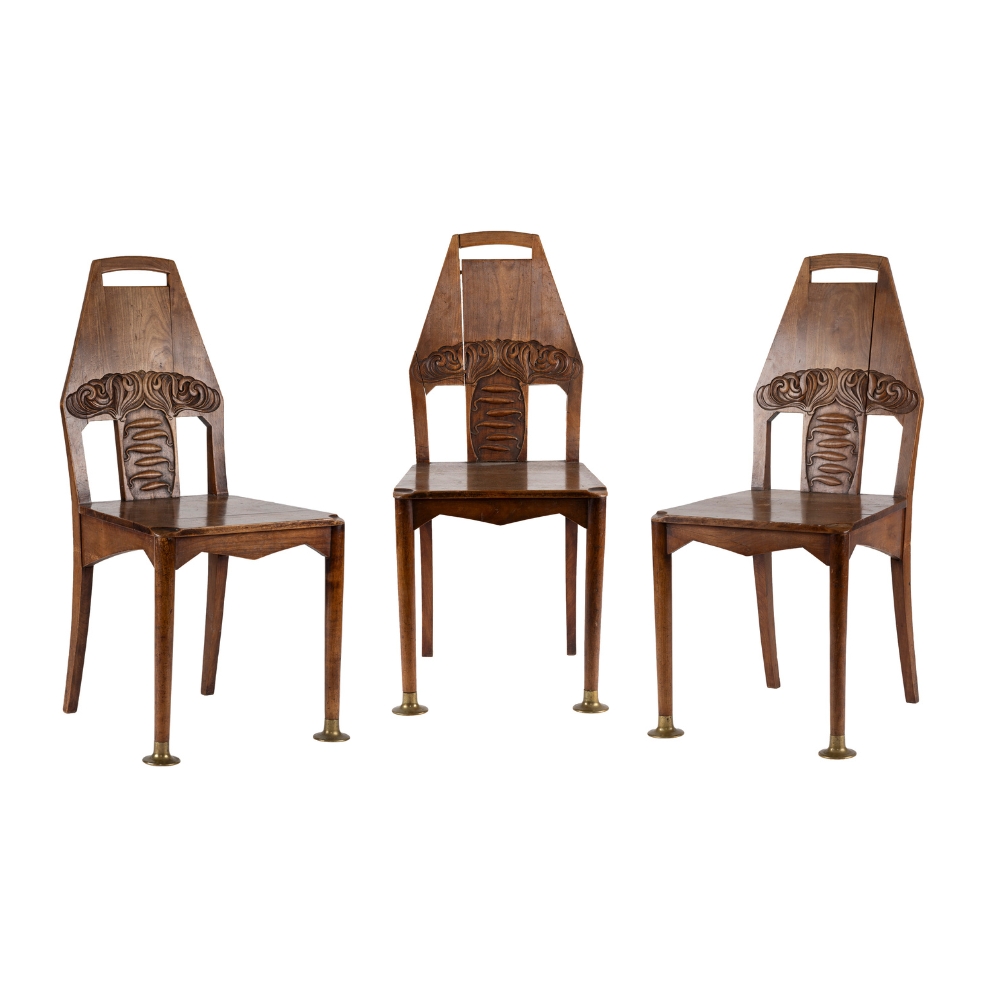
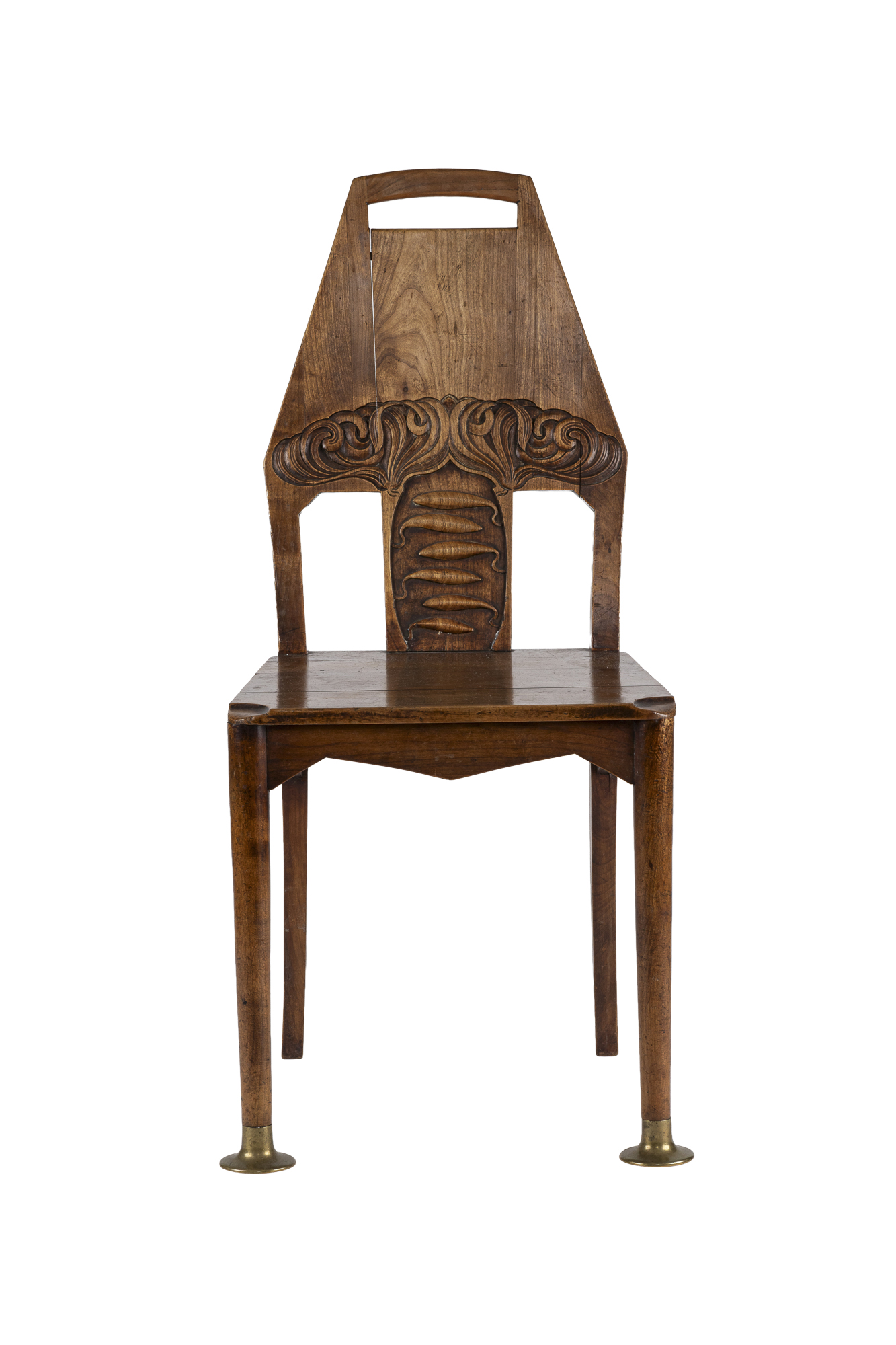
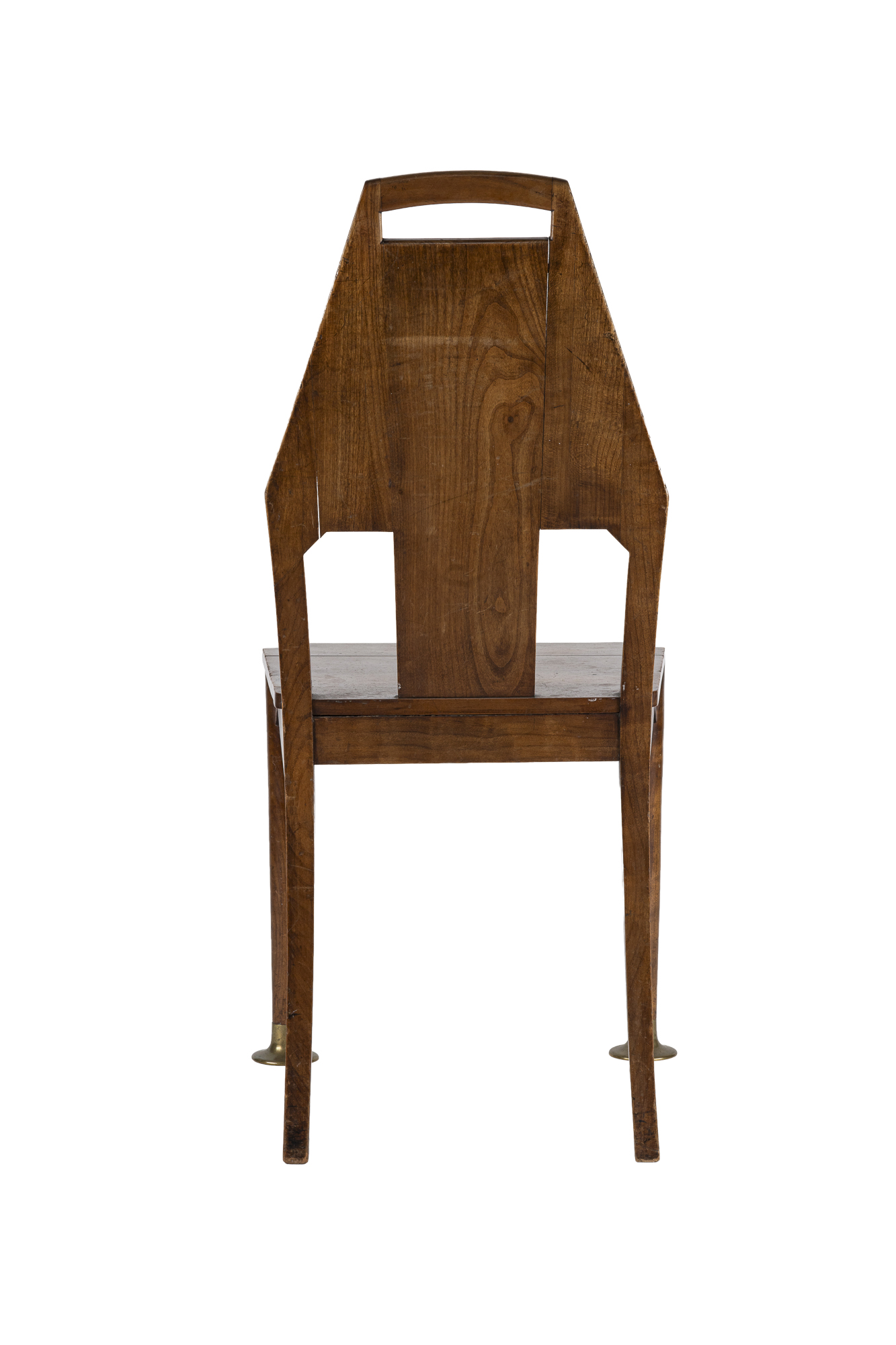
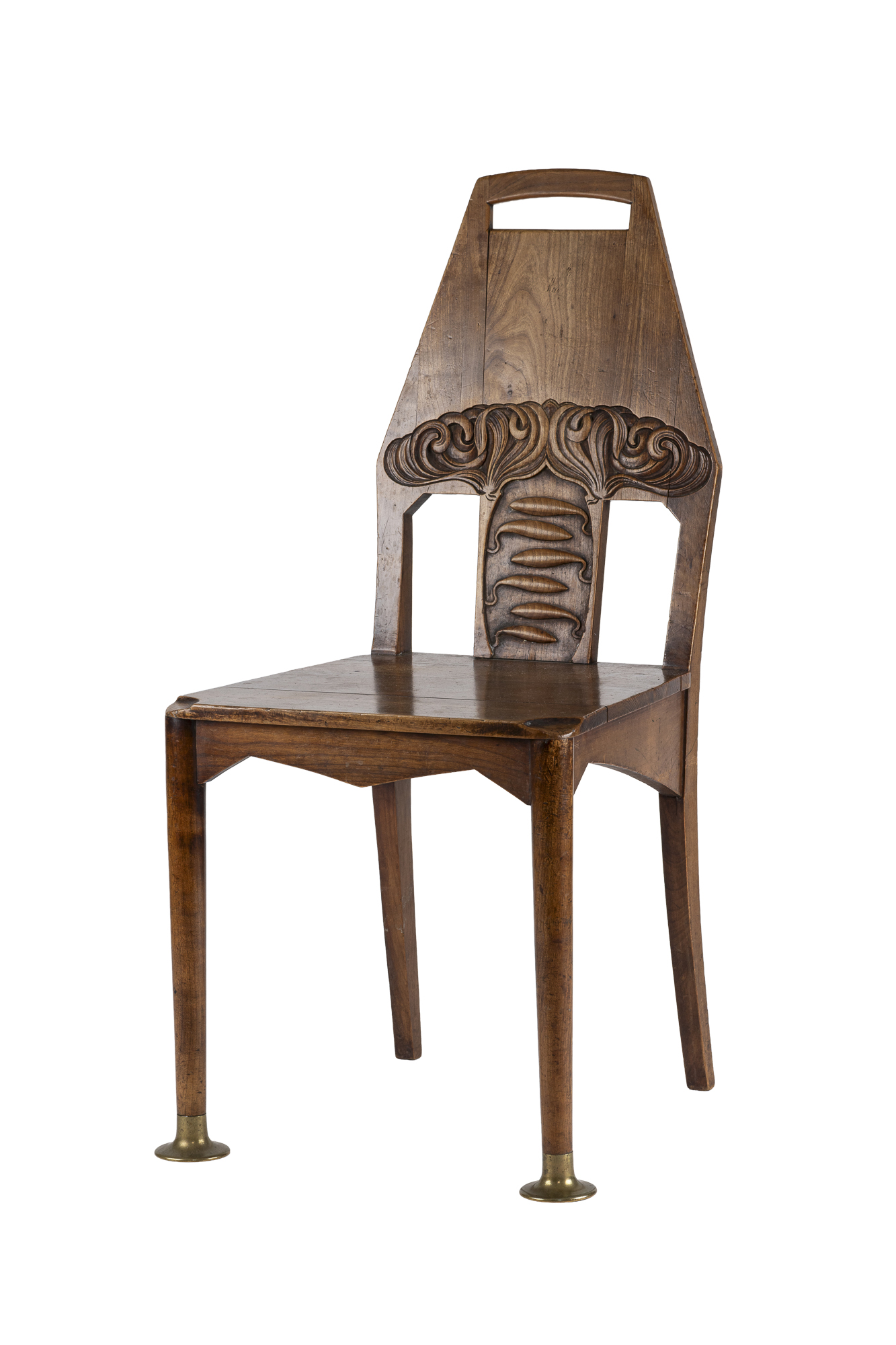
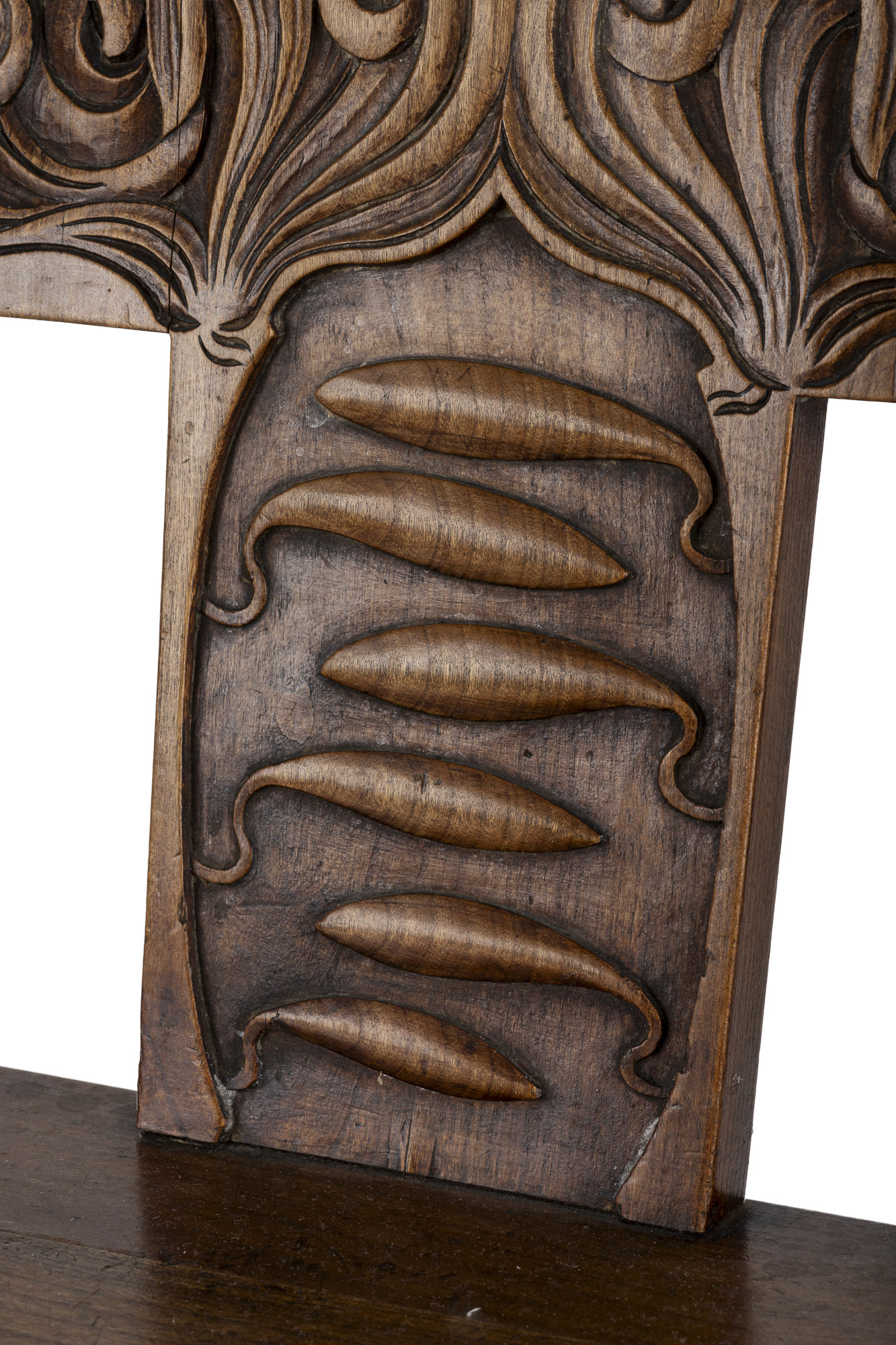
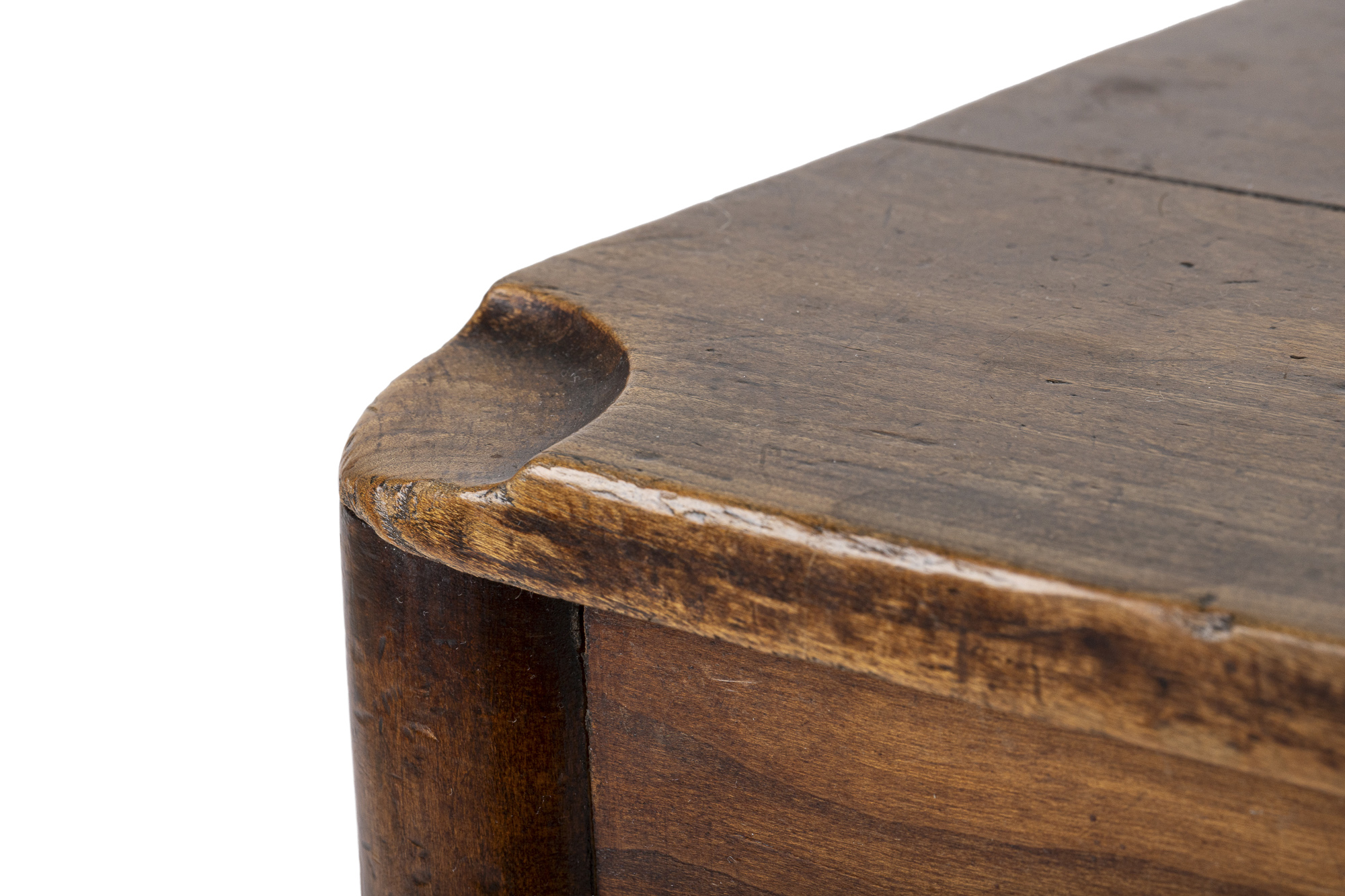
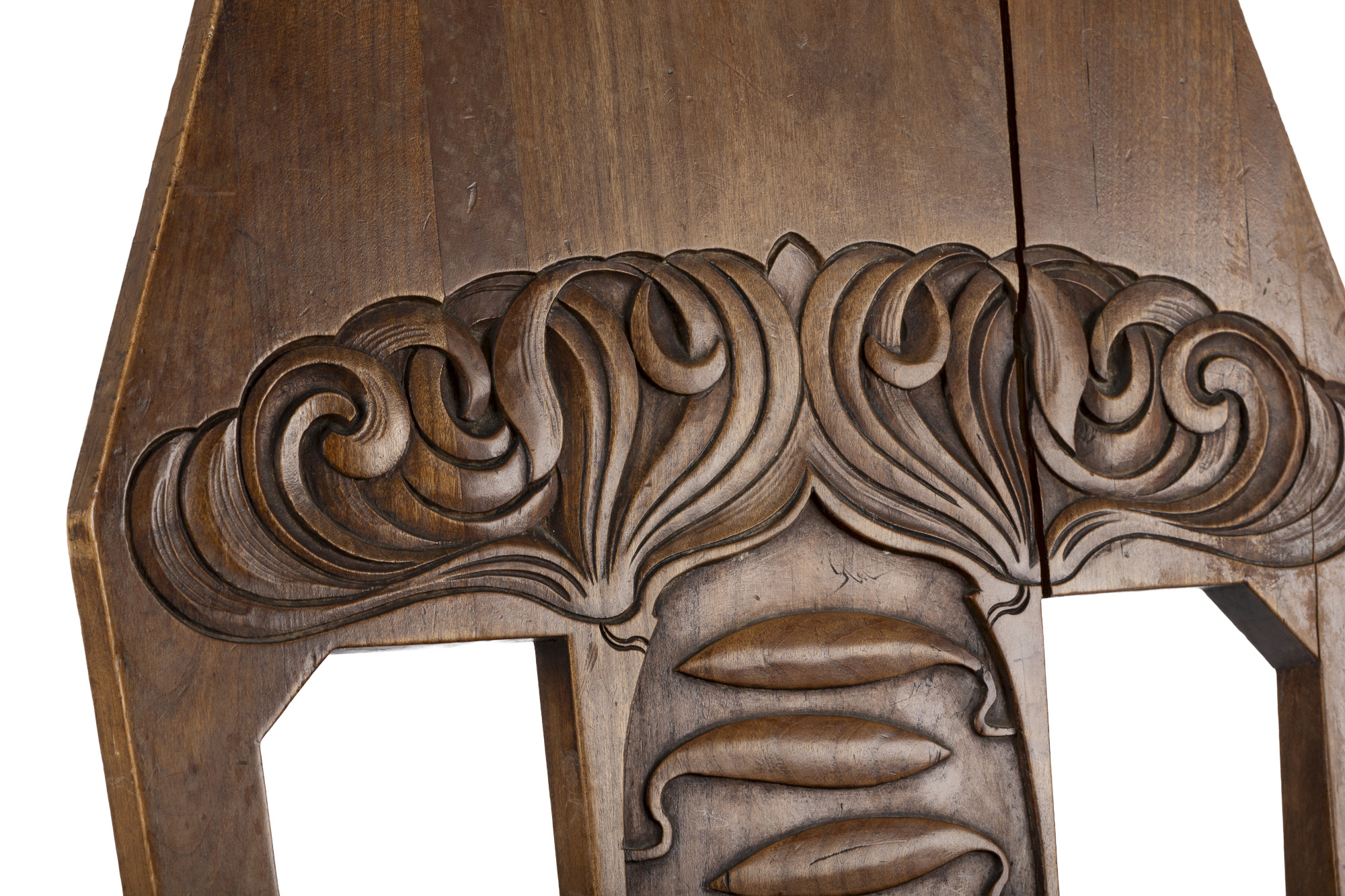
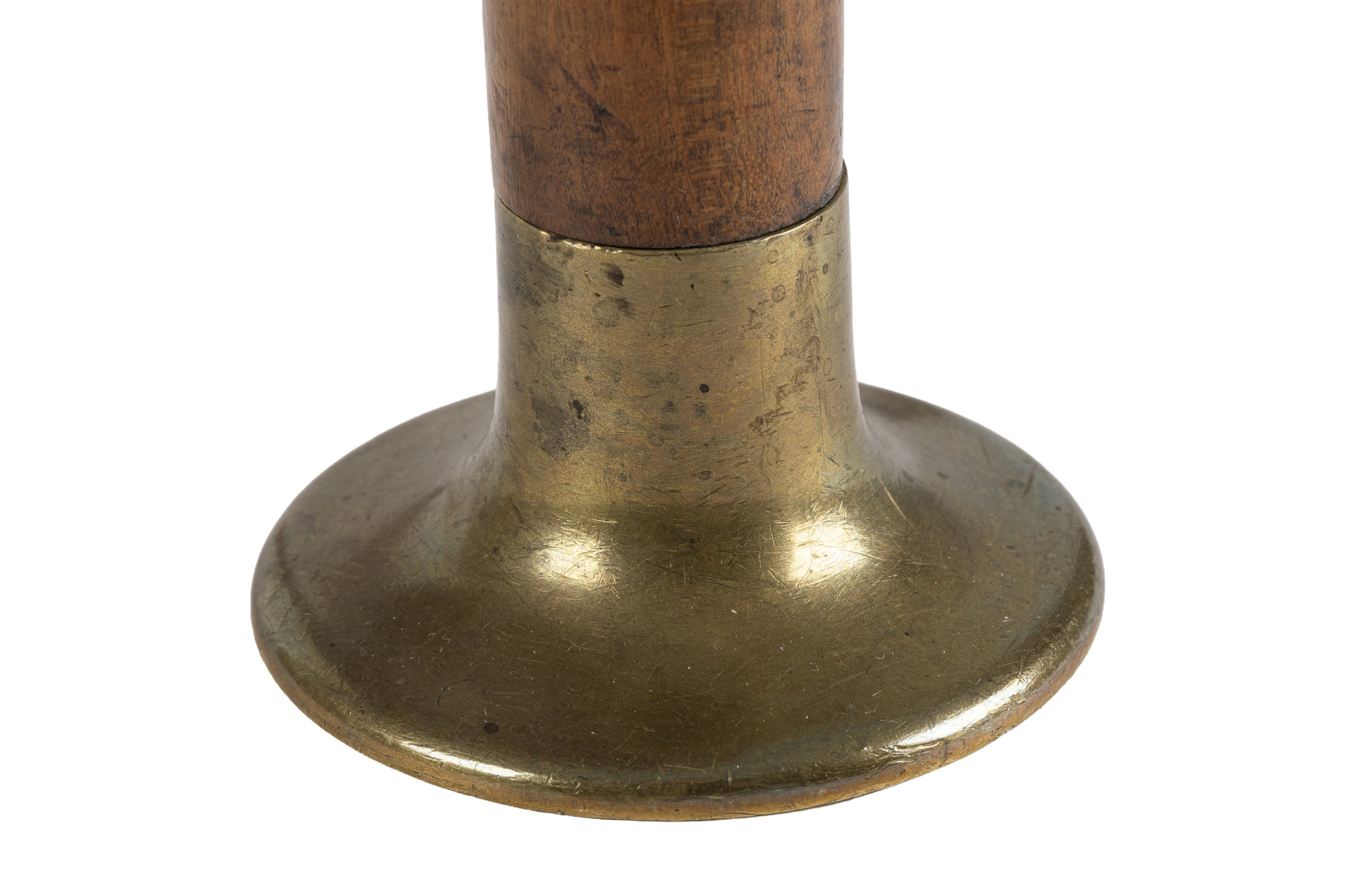
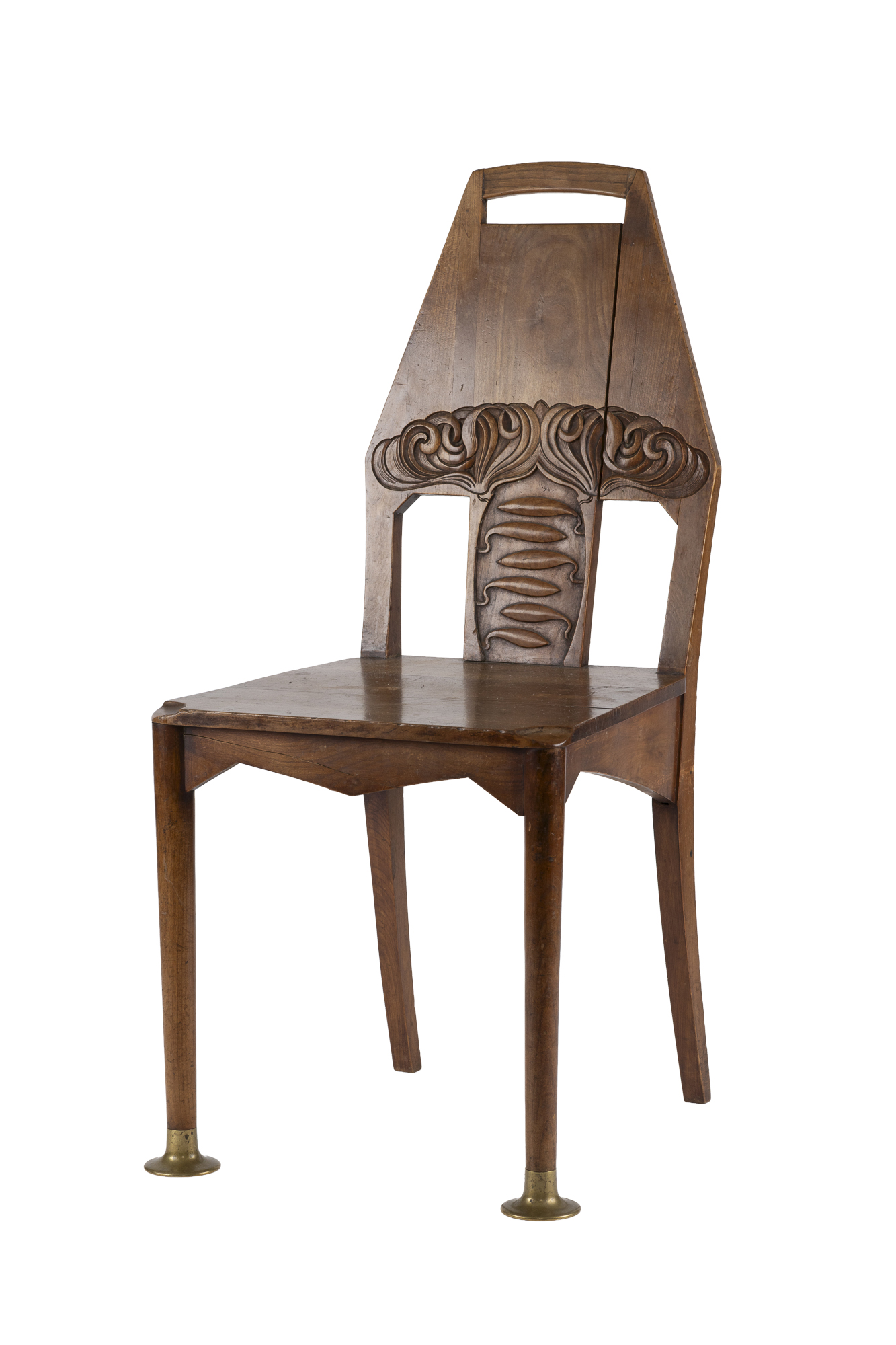
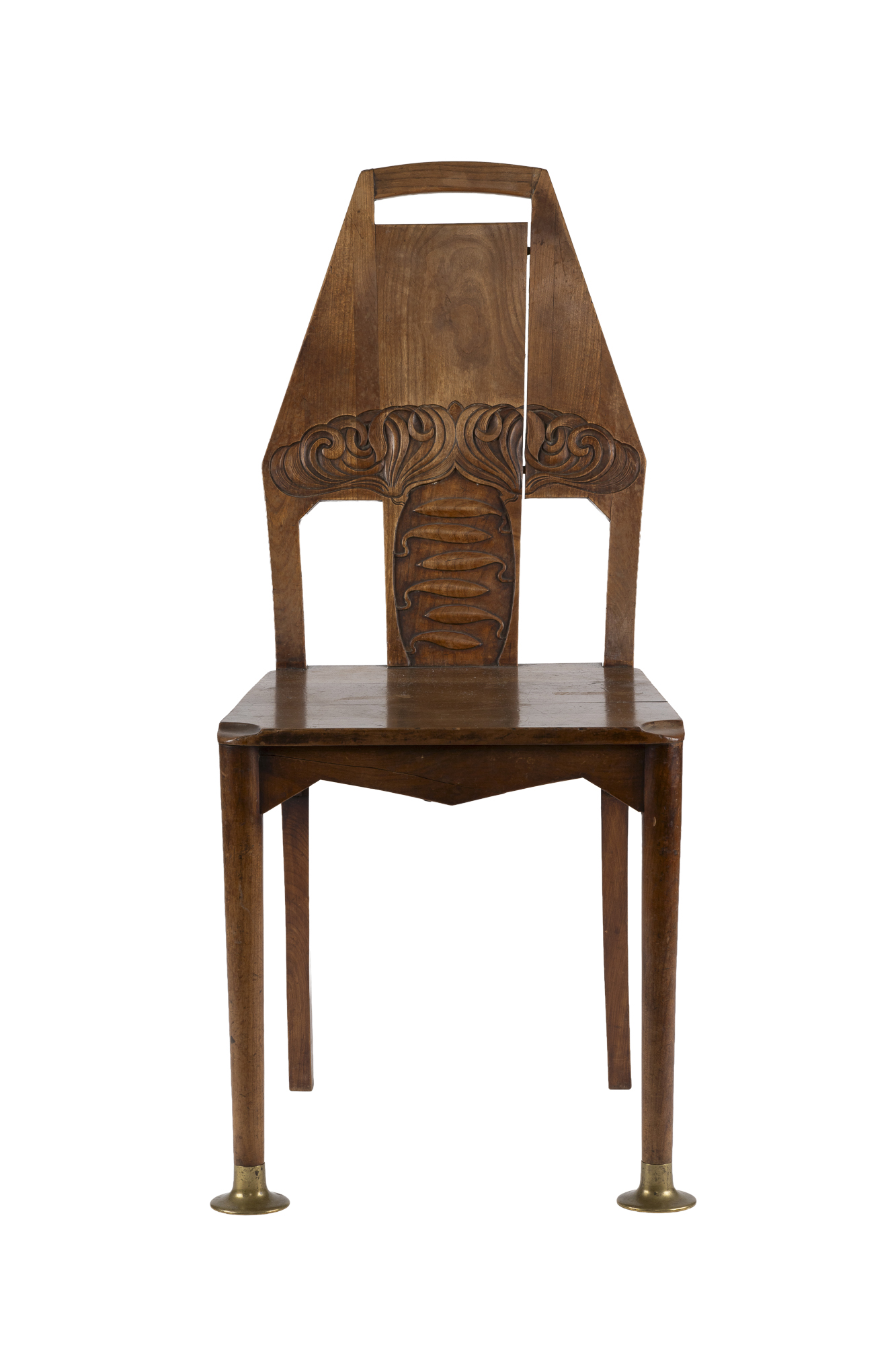
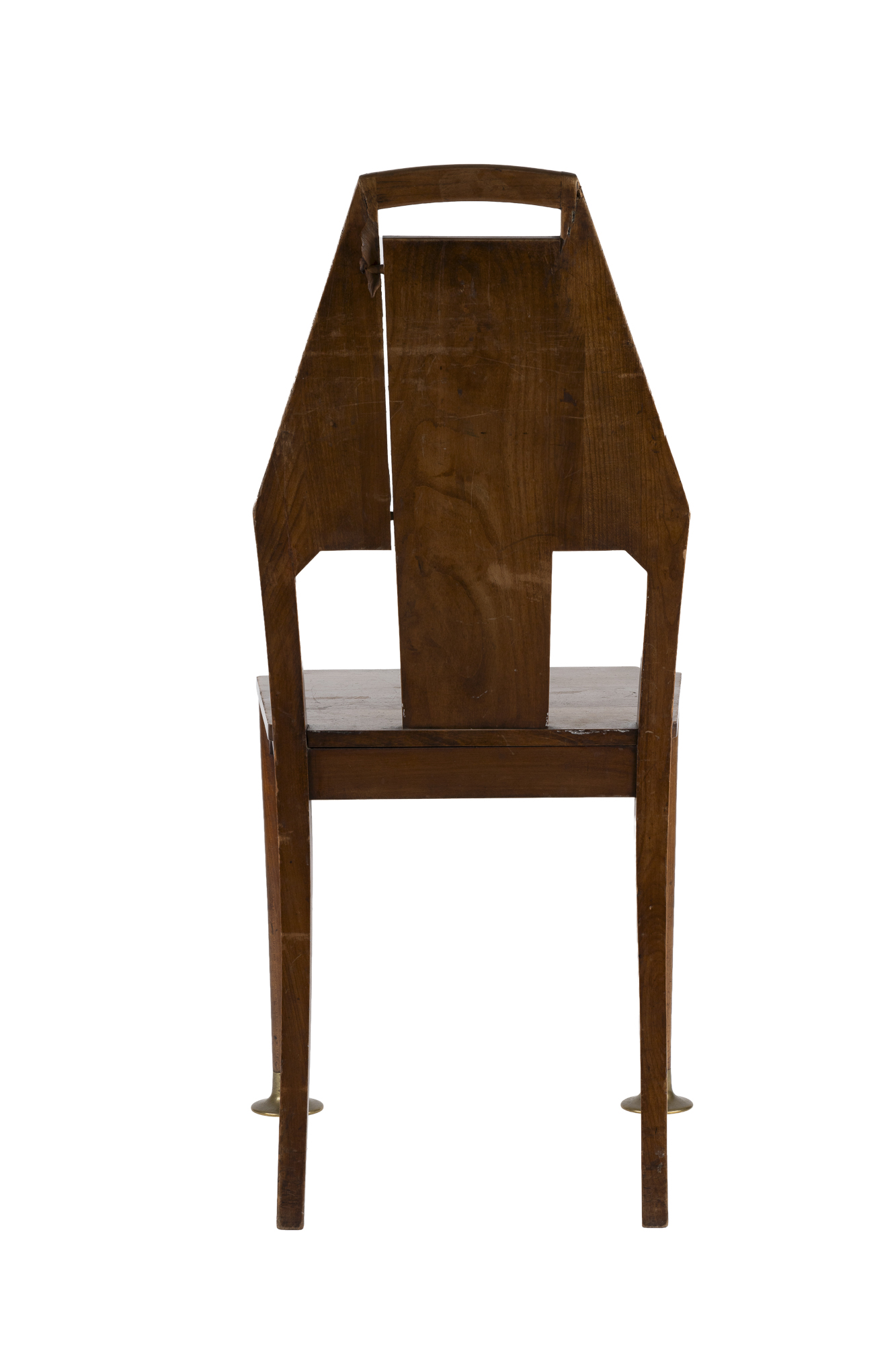
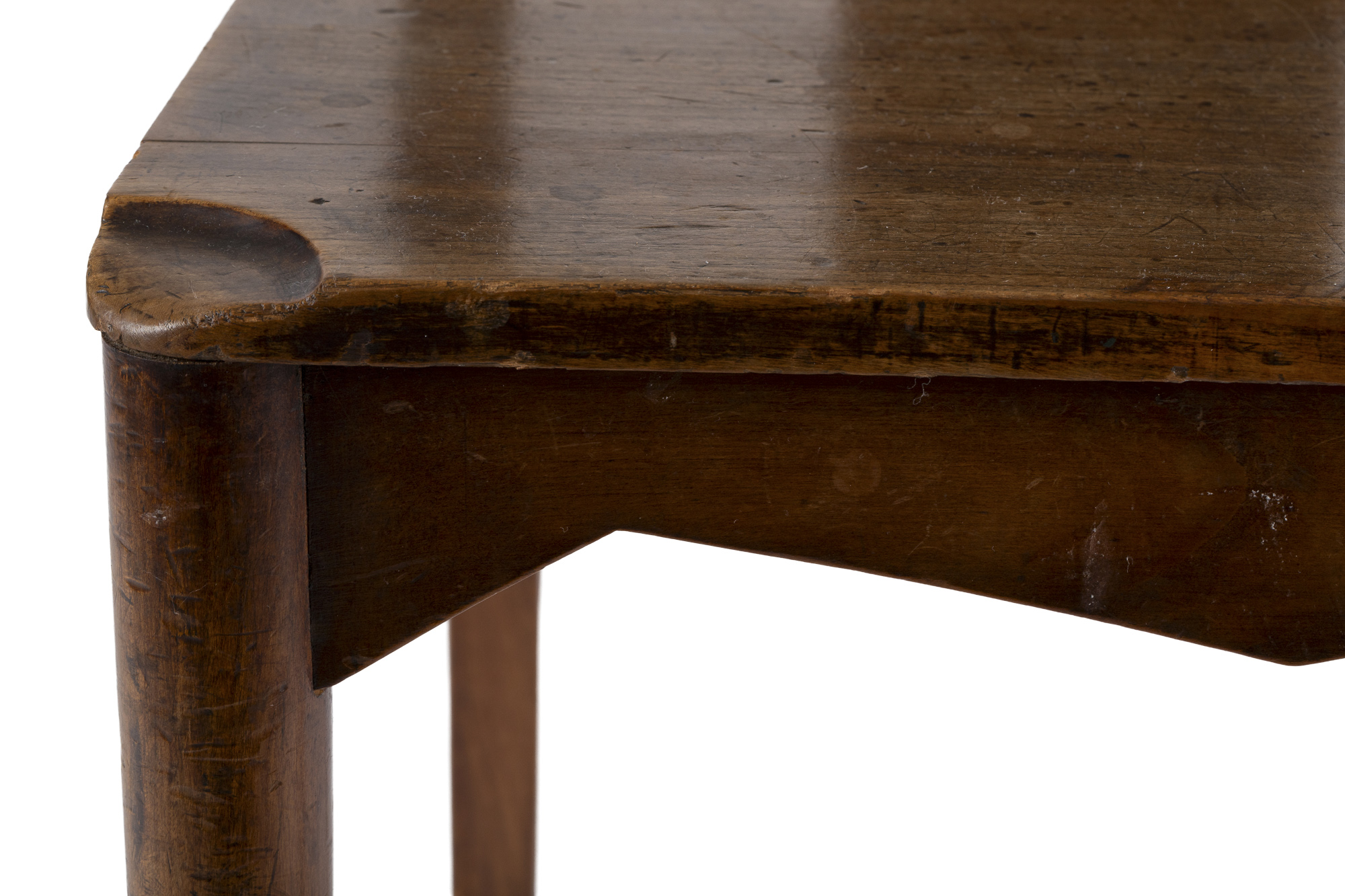
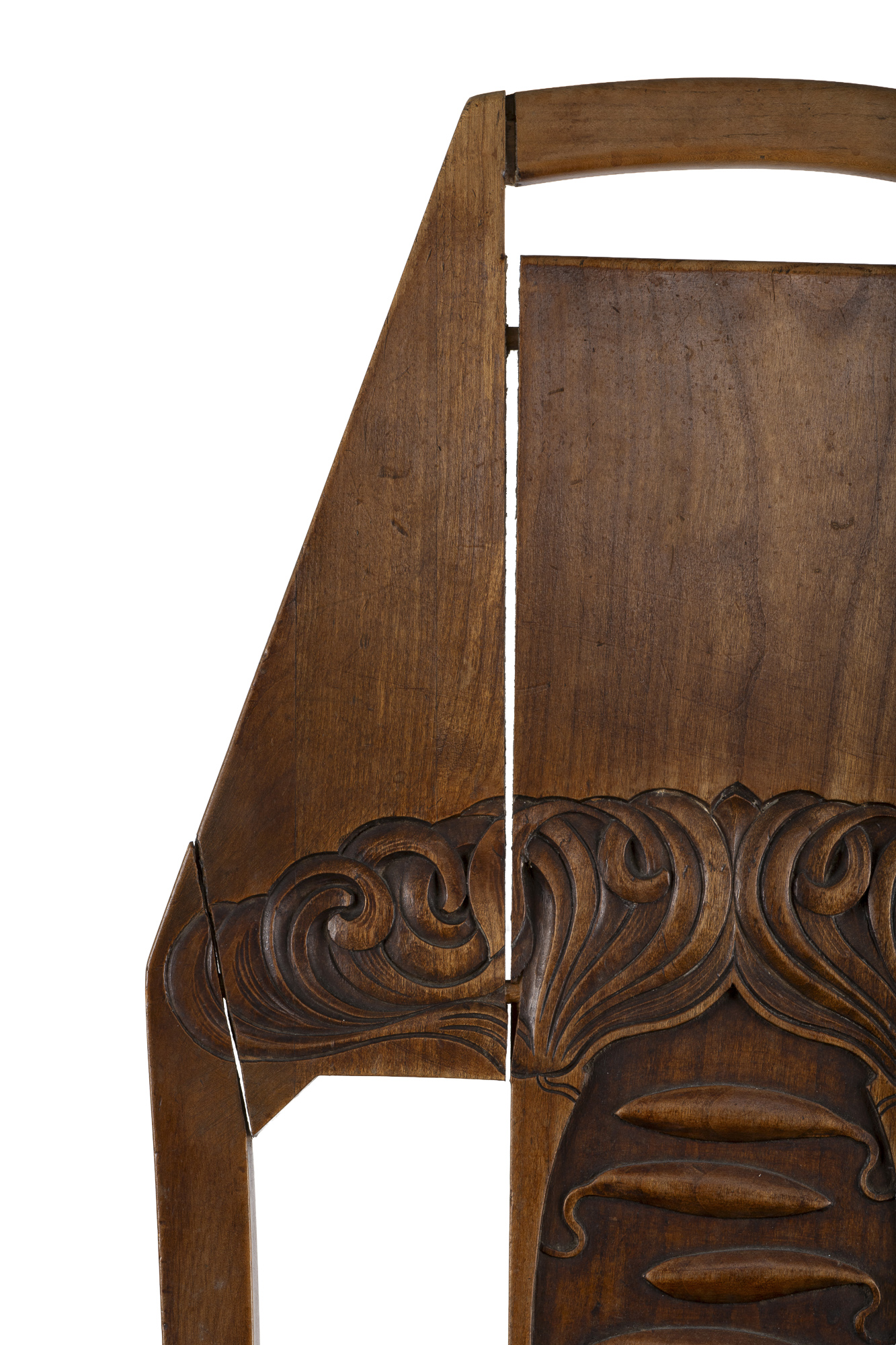
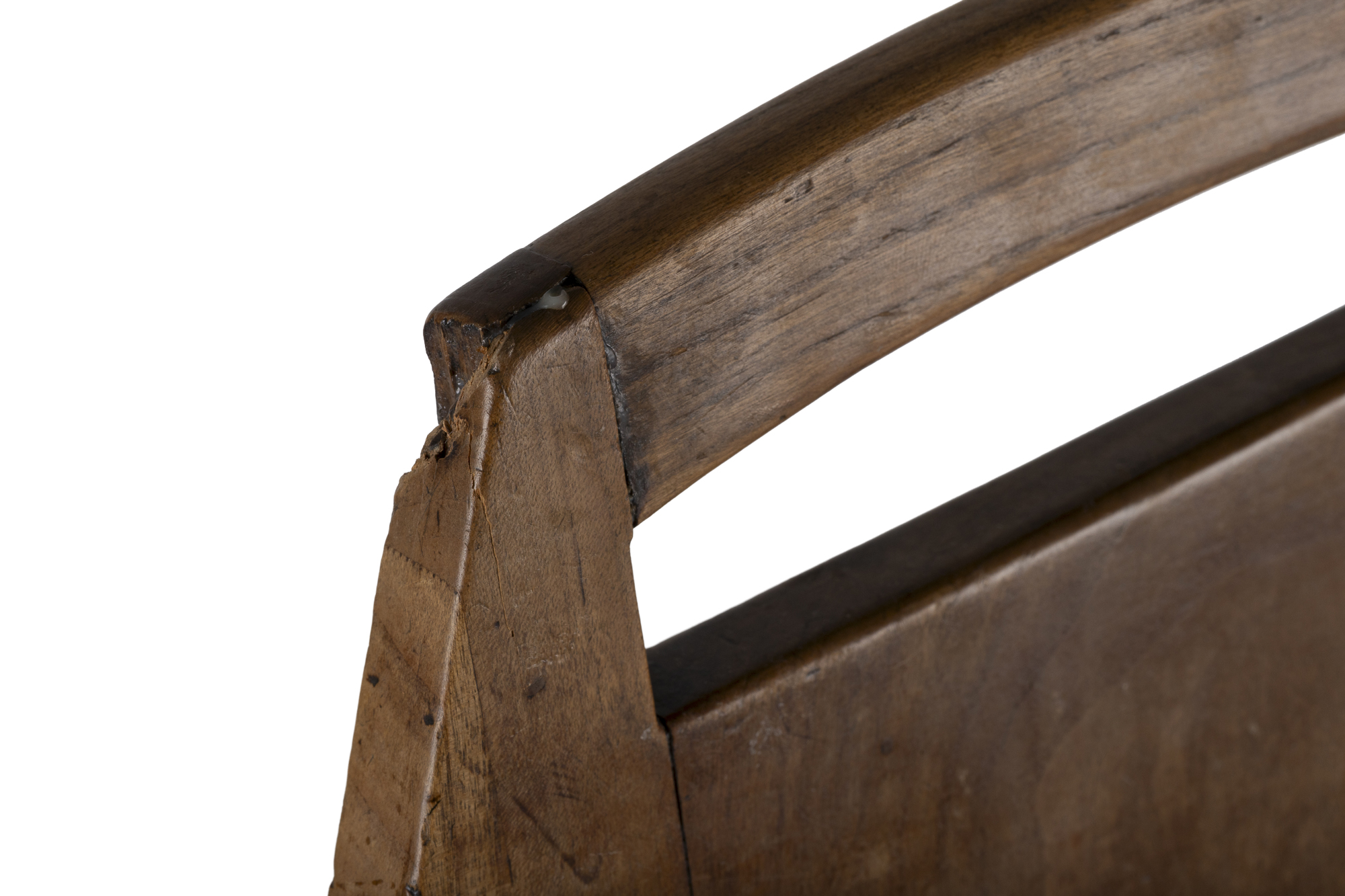
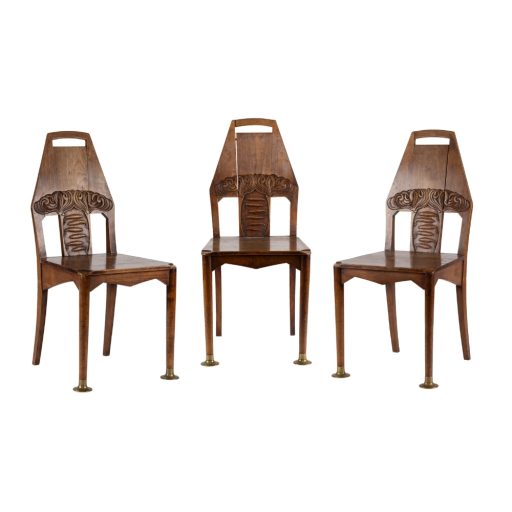
The three chairs presented here come from the dining room of the villa of writer and cultural theorist Hermann Bahr at Winzenzstraße 22 in Vienna, Hietzing. They were made in 1900/1901 after a design by Joseph Maria Olbrich by the Viennese furniture manufacturer Carl/Karl Bamberger, executed in solid cherrywood. The original suite comprised at least five, possibly up to eight examples. The surviving chairs rank among the rare pieces of furniture from Olbrich’s brief Viennese period and are important documents of early Viennese Modernism.
Joseph Maria Olbrich (1867–1908) was one of the defining founding figures of the Vienna Secession. With the Secession Building, completed in 1898, he created one of the most powerful architectural manifestos of the modern age and gave the artistic awakening around 1900 an iconic form that remains instantly recognizable today. As Olbrich was called to Darmstadt as early as 1899/1900, his furniture designs created in Vienna are exceptionally rare.
The commission came from Hermann Bahr (1863–1934), a central figure in Vienna’s literary and cultural life around 1900. As a leading voice of Jung-Wien, a cultural mediator, and a close intellectual companion of the Secession, Bahr played a decisive role in shaping the artistic and intellectual exchange of the period. Between 1900 and 1912, his villa became an important meeting place for the avant-garde; his guests included Arthur Schnitzler, Hugo von Hofmannsthal, Gustav Klimt, Otto Wagner, Richard Strauss, and Gustav Mahler.
The furniture very likely accompanied Bahr on later moves, including to the piano nobile of Schloss Arenberg in Salzburg. The more recent provenance leads to Otto Schenk, who achieved international recognition as a director, actor, and theatre director, while also being a dedicated collector of art and design of Viennese Modernism.
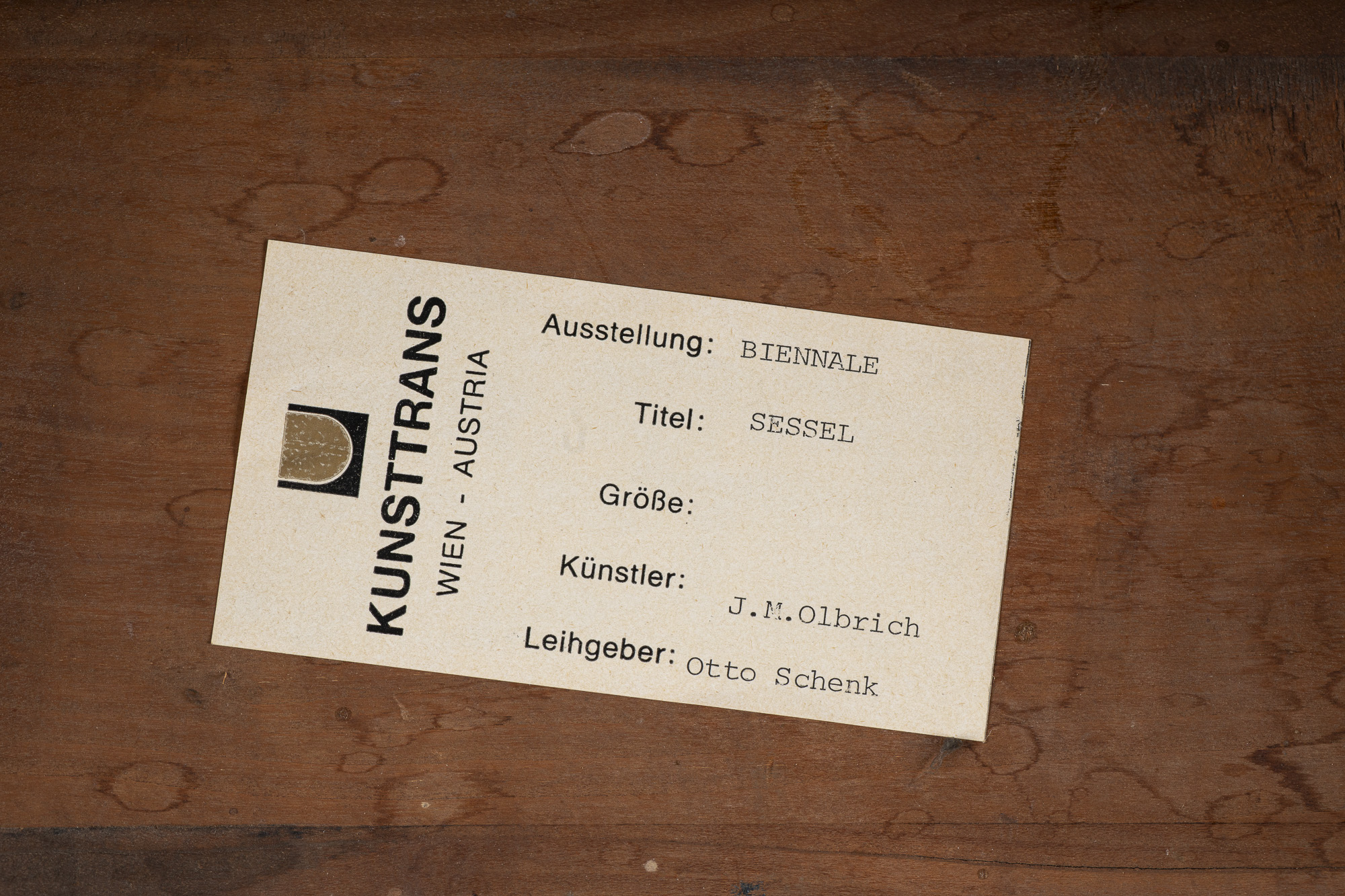
One of the three chairs was shown in 1984 in the exhibition Le arti a Vienna – Dalla secessione alla caduta dell’impero Asburgico at the Venice Biennale, with Otto Schenk acting as lender. Two original admission tickets from this exhibition have survived and are included in the price of this particular chair.
Together, the three chairs form an exceptionally rare ensemble from one of the important interiors of Viennese Modernism and at the same time a significant document of Olbrich’s direct work at the heart of the Vienna Secession.