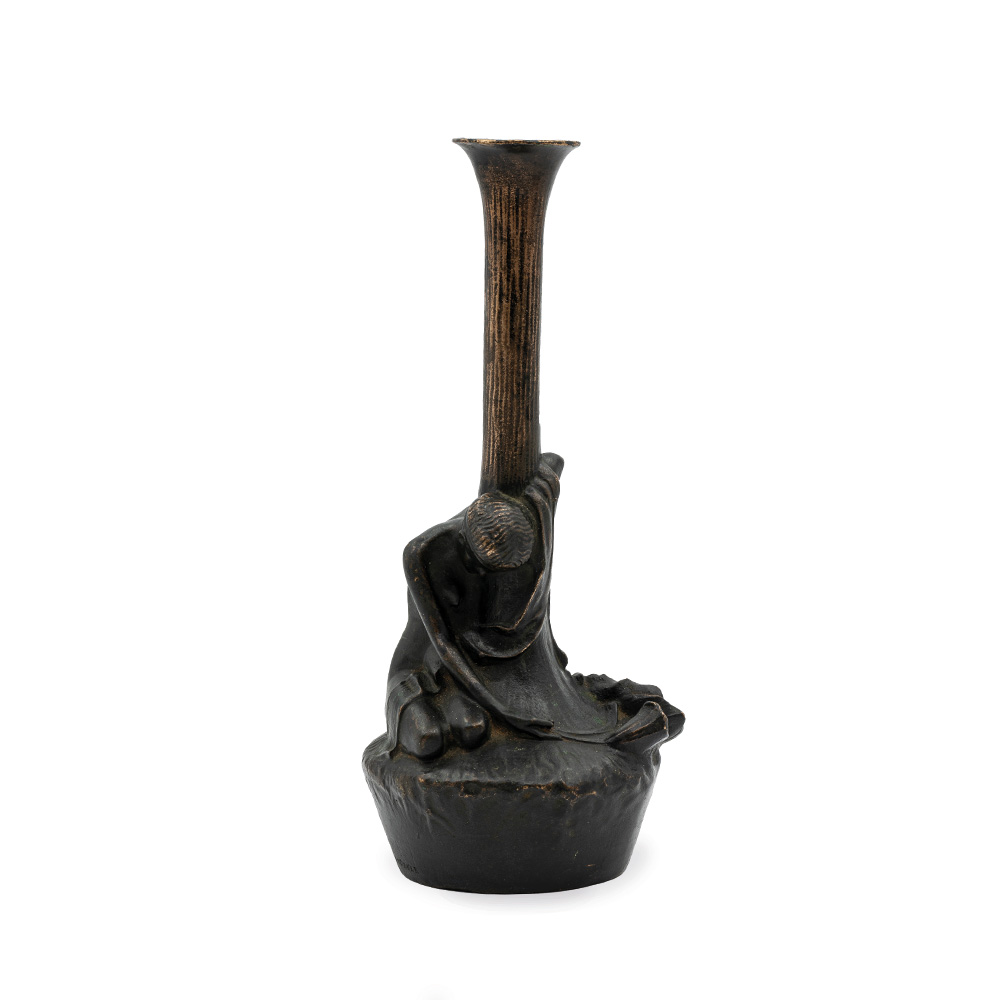
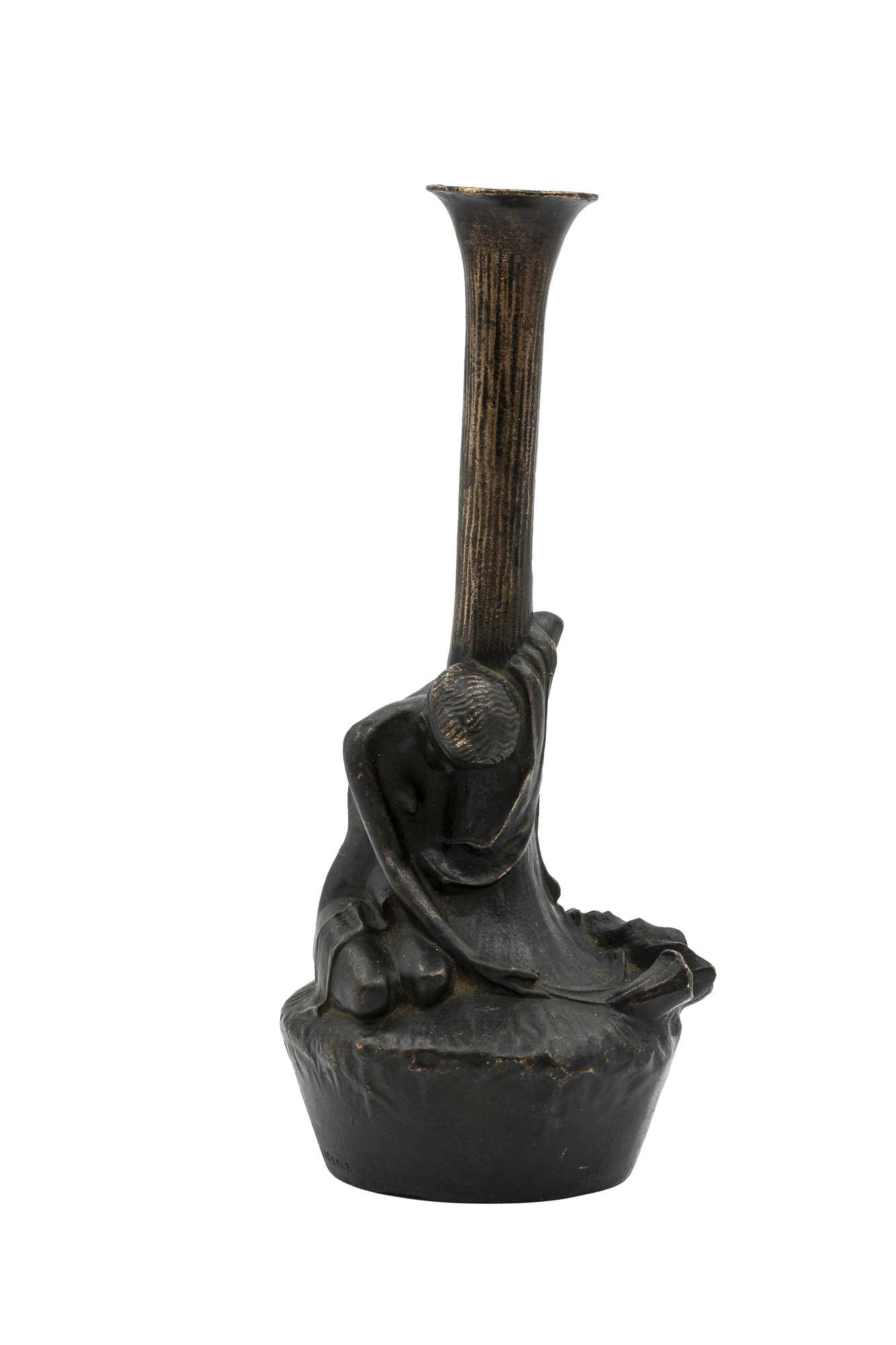
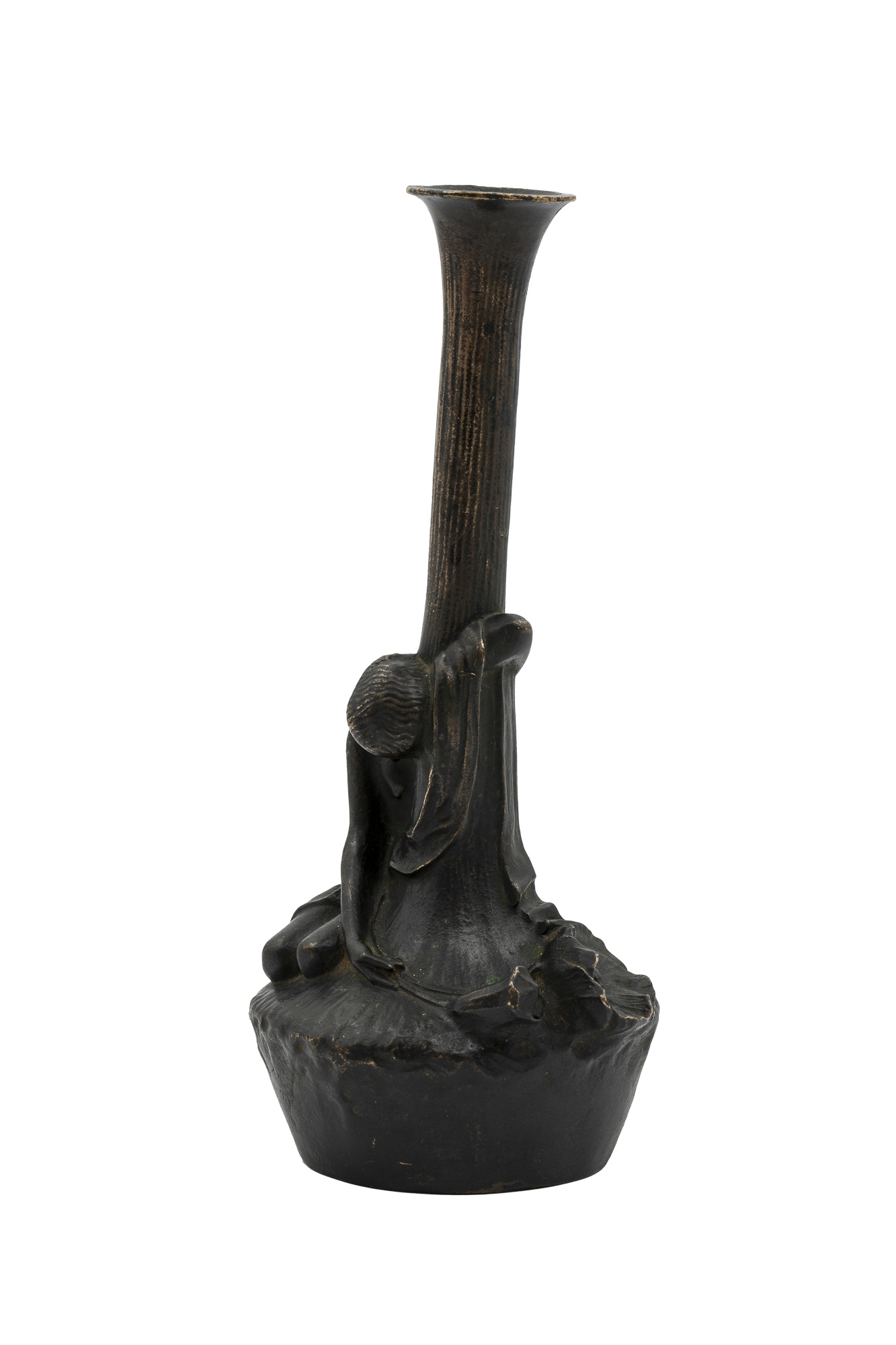
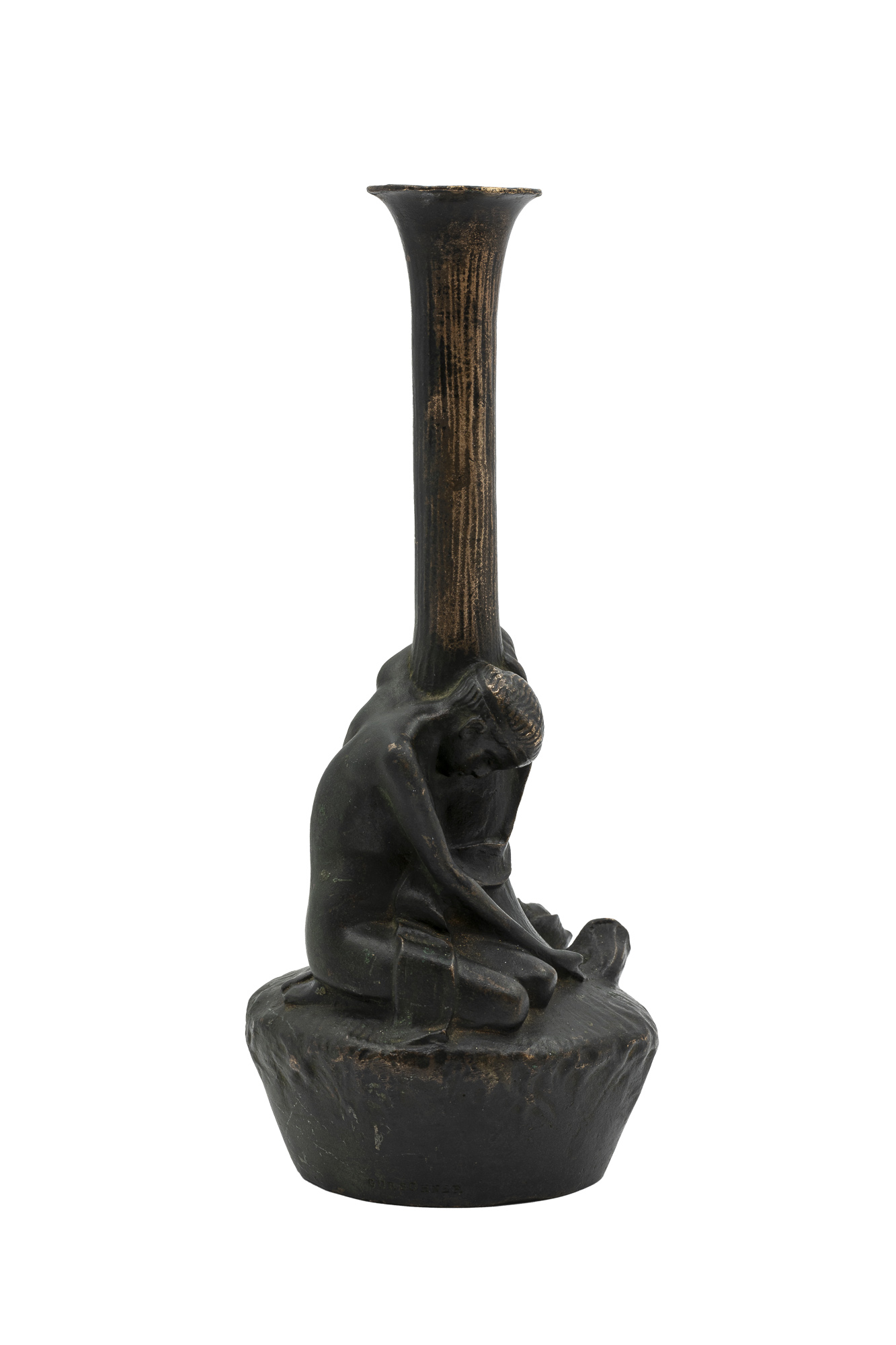
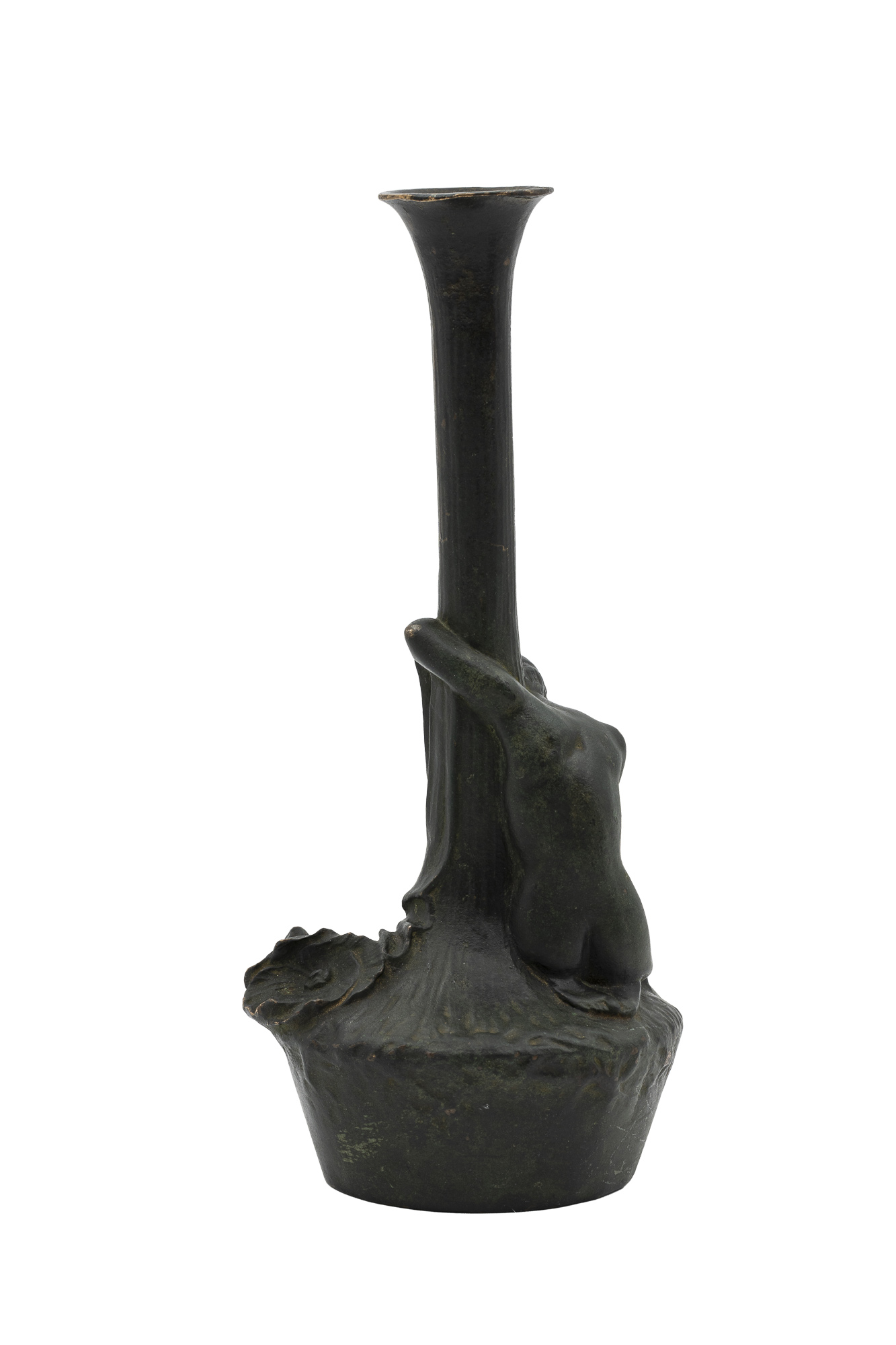
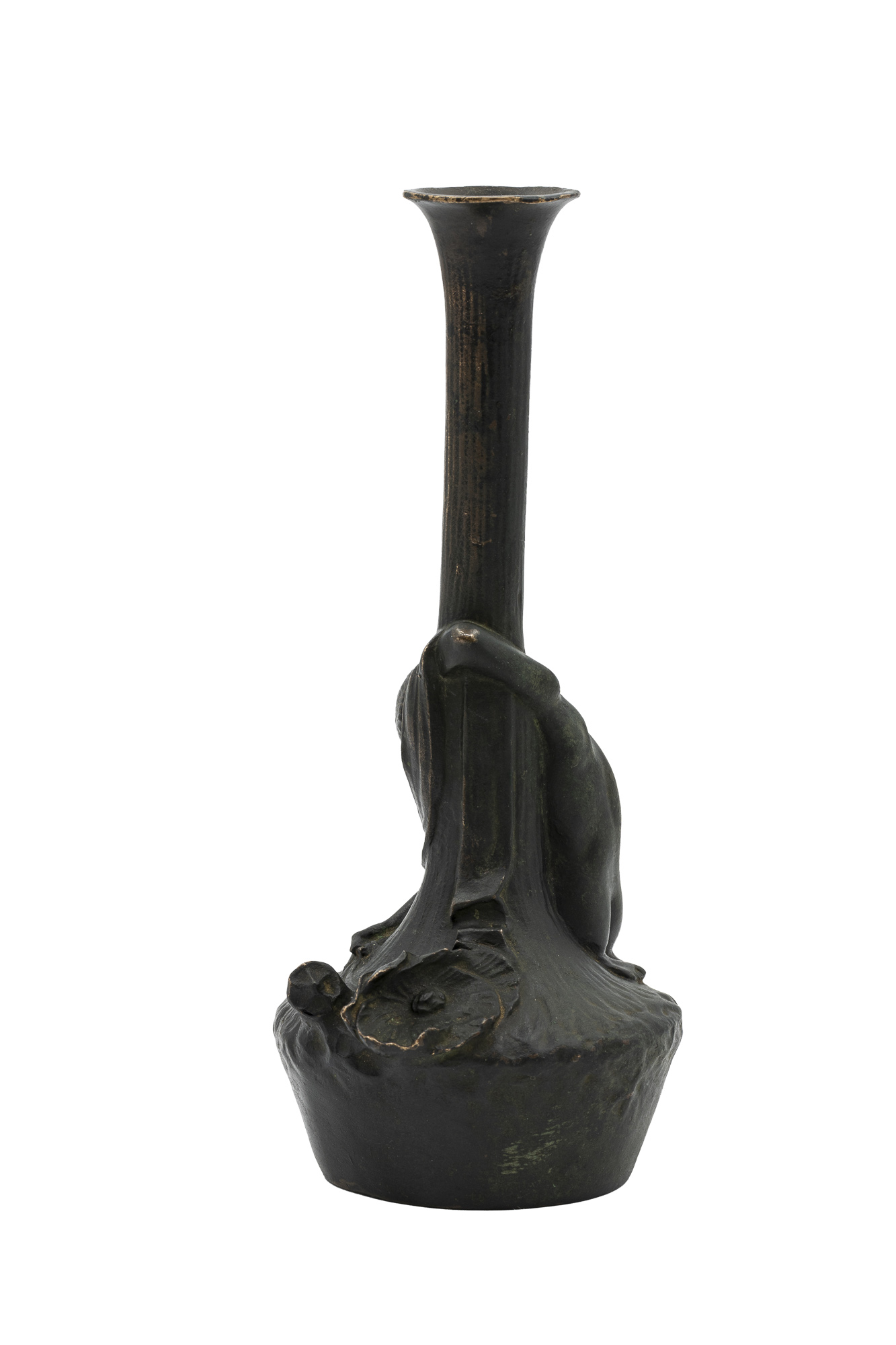
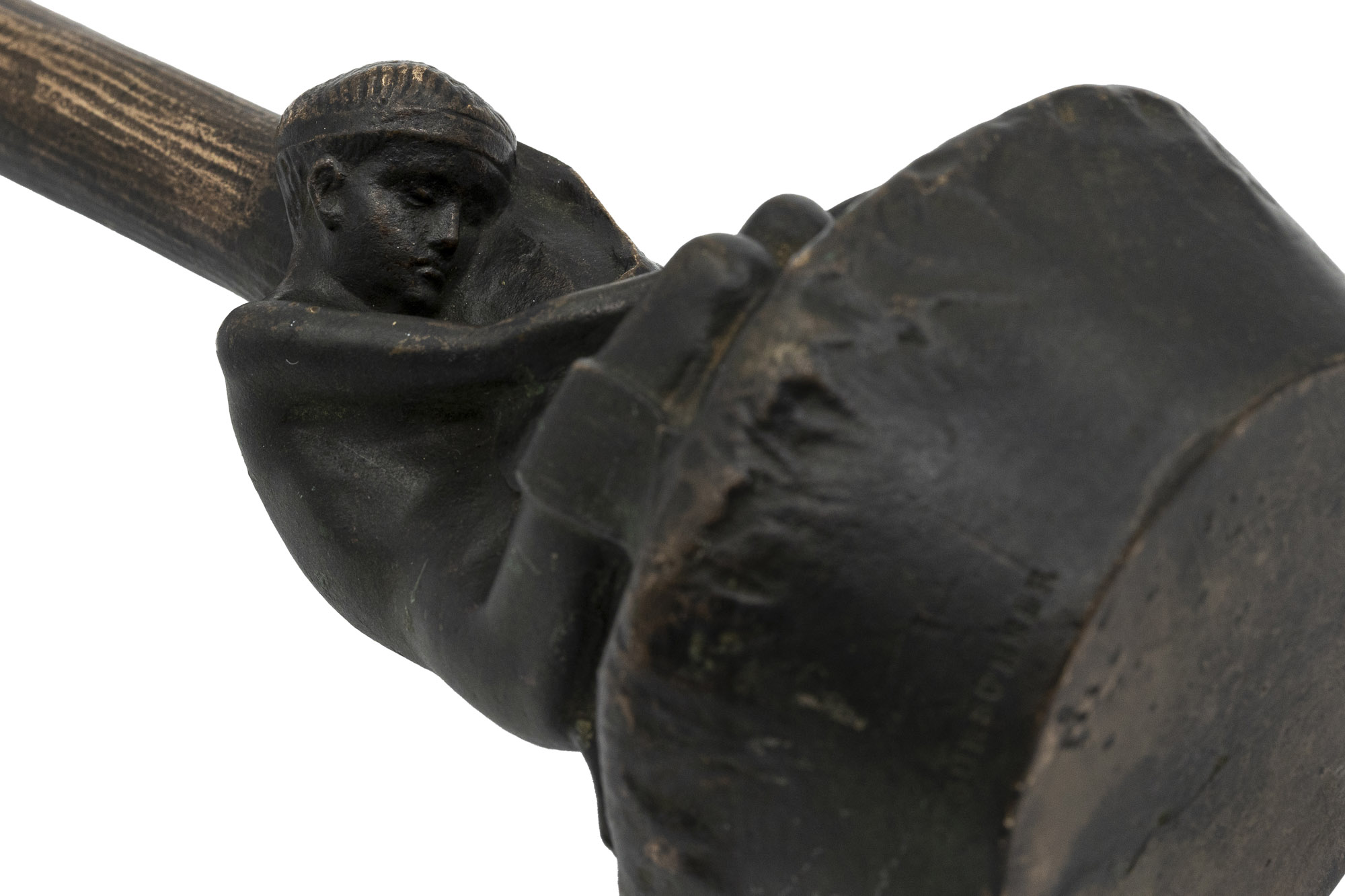
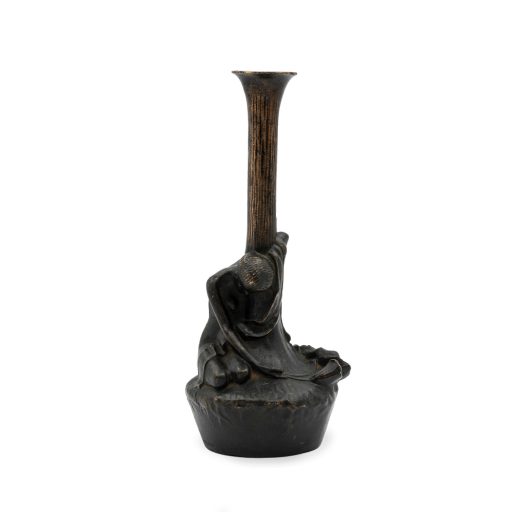
In the Poppy-Candlestick, a sinuous, androgynous figure reclines at the base of the candleholder, gently curled around the central form, a poppy flower resting delicately in one hand. The botanical symbolism of the poppy deepens the emotional and artistic resonance of the object: long associated with sleep, dreams, oblivion, and death, the poppy is a plant full of mystery and metaphor. Its fleeting bloom evokes impermanence and beauty in equal measure, while its narcotic properties — known since antiquity — link it to both pain relief and visionary states. The candle, with its ephemeral flame, underscores this theme of transience, making the object a poetic meditation on the fine line between light and shadow, wakefulness and slumber, life and afterlife.
The flowing lines of nature, articulated in both figure and floral motif, are subordinated to an underlying geometric order, revealing Gurschner’s ability to harmonize expressive potential with the intellectual rigor of modern design. Through pieces like this, he helped define a Secessionist aesthetic in which beauty and utility were inseparable — shaping the creative environment that Moser, Olbrich, Hoffmann, and others collectively brought to maturity. In this work, the poppy does not merely decorate: it speaks, it dreams, and it remembers.
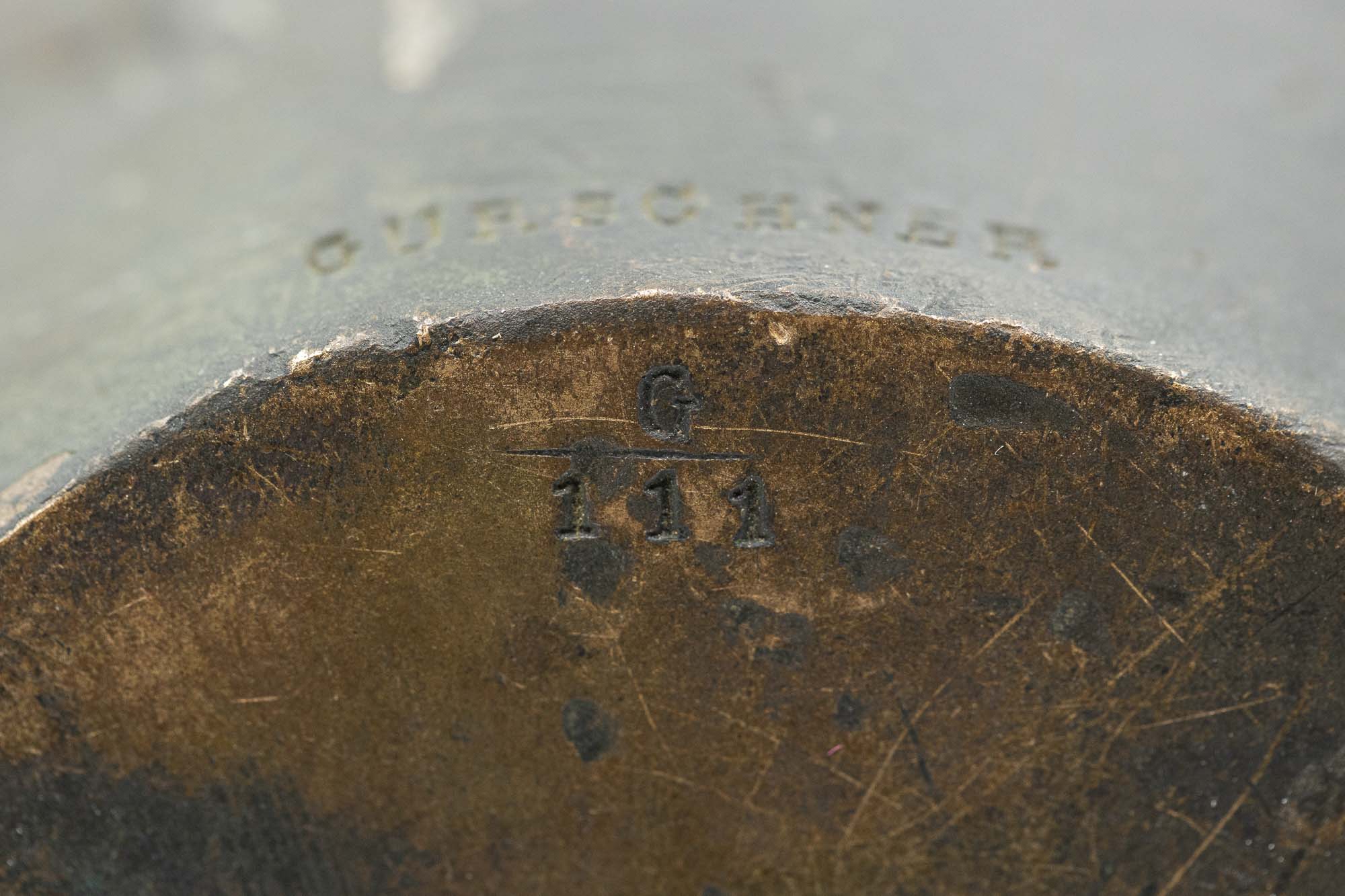
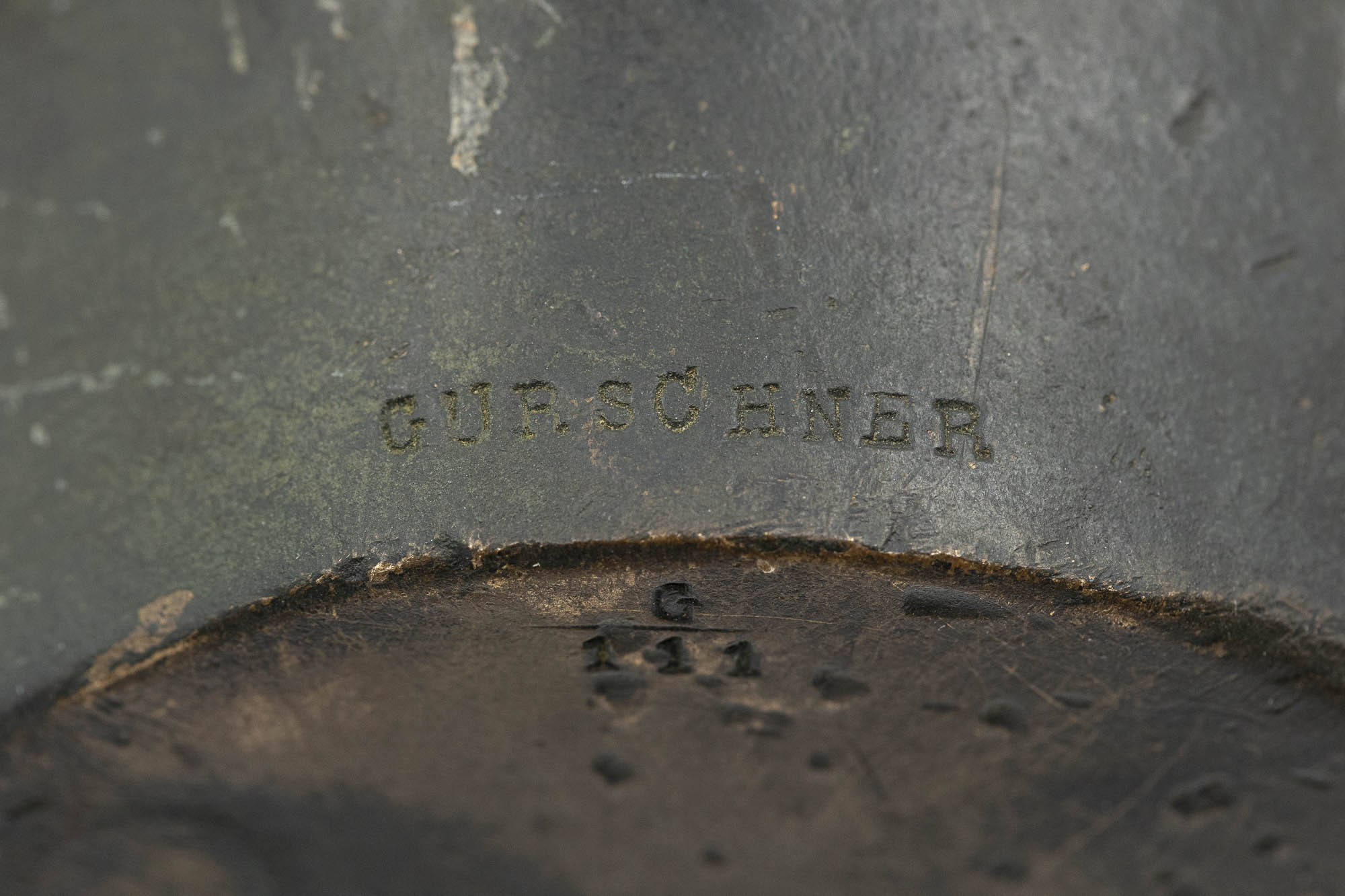
Exhibited in the Kunstgewerberaum of the Second Secession Exhibition, the Poppy-Candlestick embodies the emerging role of the artist-craftsman in fin-de-siècle Vienna — an individual who could merge sculptural invention with practical function. Cast in patinated bronze, the candlestick translates botanical form into a sculptural gesture that is at once functional, poetic, and formally disciplined. It is marked with “Gurschner” / “G 111.” Gurschner, who trained in both sculpture and applied arts, was central to the Secession’s effort to elevate decorative objects to the status of high art.
His work demonstrates how organic motifs could be abstracted into structural principles, a concept that influenced furniture, metalwork, and architectural ornament throughout Vienna around 1900.