The history of Johann Loetz Witwe begins in 1836 when a certain H. Johann Bapt. Eisner established a glass manufacture in Klostermühle (Bohemia). At that time mainly utilitarian glass was produced.
In 1851, the manufacture was acquired by Dr. Franz Gerstner and his wife Susanne - the widow of the glass manufacturer Johann Lötz. Shortly thereafter, Gerstner transferred his half to Susanne Lötz, who registered her company in 1858 under the name "Johann Lötz Witwe" (the international spelling "Loetz" established itself later on). In 1879, Susanne Lötz transferred the manufactory to her daughter and her daughter's husband, a certain Maximilian knight von Spaun.
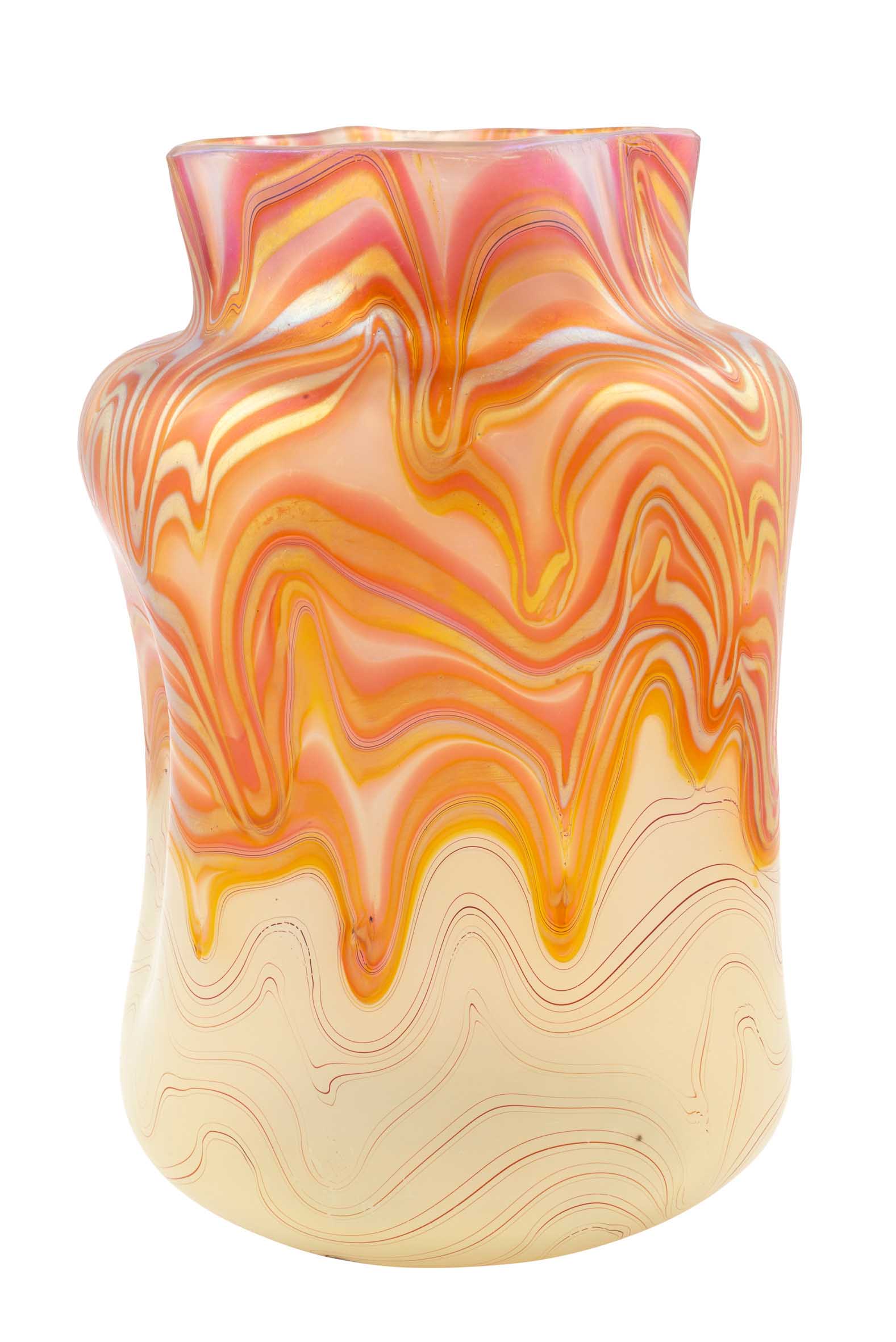
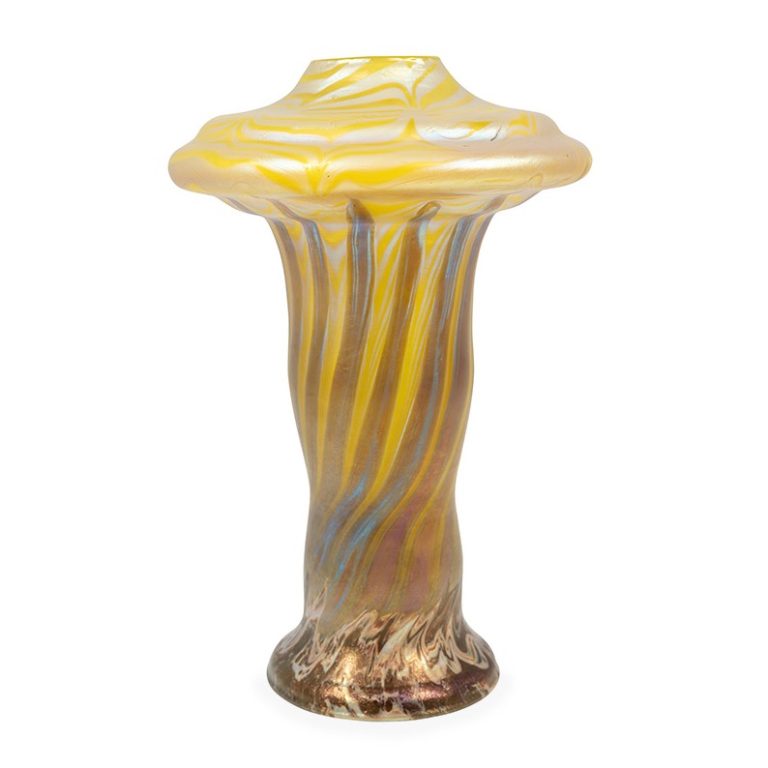
In 1897, von Spaun probably discovered Louis Comfort Tiffany glasses at an exhibition in Bohemia. An encounter, which must have left a lasting impression on the entrepreneur: a short time later, the first glass objects with "Phenomen Genre" decorations appeared.
Von Spaun hired the Munich-born painter Franz Hofstötter to provide artistic impulses in the workshop ahead of the Paris World Exhibition 1900. This cooperation was an absolute success for Maximilian knight von Spaun. His glassworks Johann Loetz Witwe was awarded the Grand Prix in Paris in 1900 and thus found itself virtually overnight on the level of traditional companies such as Louis Comfort Tiffany as well as Émile Gallé and Daum Frères from Nancy.
In parallel, Loetz began to collaborate with artists from Vienna. Especially the designers of the Wiener Werkstätte and their students deserve to be mentioned at this point: Koloman Moser, Josef Hoffmann, Robert Holubetz, Hubert Gessner and Hans Bolek, as well as many others, contributed groundbreaking designs to Loetz's production line for years. Exports were made worldwide: In addition to exhibitions in St. Louis and Milan, the company also showed their products in Vienna, Prague and Leipzig. Buyers were found in London, Paris, Berlin, and even as far away as India.
However, after the successes around 1900, customer interest waned. The glassworks tried to react by employing more and more artists from Vienna. In 1909, Adolf Beckert, a young and dynamic artistic director was hired, and in 1913, additional representatives were commissioned to sell the glass.
The beginning of the First World War put an end to all efforts. The prices for raw materials and transporting goods soared, and qualified workers were hard to come by. While the 1910s could still be managed financially, the 1920s did not bring any significant relief for Johann Loetz Witwe. Production continued for a few more years - supported by noble donors from the circle of friends of the Spaun family - at a constant loss, but in 1939 the glassworks in Klostermühle had to cease production due to insolvency.
In the 1980s, the glass objects of the Loetz manufactory eventually attracted the attention of international collections. Objects from the time of the Paris World Exhibition 1900, vases with the decorative designs of Franz Hofstötter as well as designs by artists from the circle of the Wiener Werkstätte saw their prices increase significantly. With the discovery of the glassworks’ paper patterns, research in this field intensified.
Today, items from this traditional workshop can be found in the world's most famous museums. In the last 20 years, glass objects from Klostermühle have once again experienced a strong price increase - currently, there seems to be no end in sight. Thanks to a global network of experts, there is a lively exchange of information. New decorative variations are constantly being discovered and given their original names. Glasses by Johann Loetz Witwe are more sought-after today than ever before, and an ever-growing circle of collectors is succumbing to the fascination for these fantastic works of art.