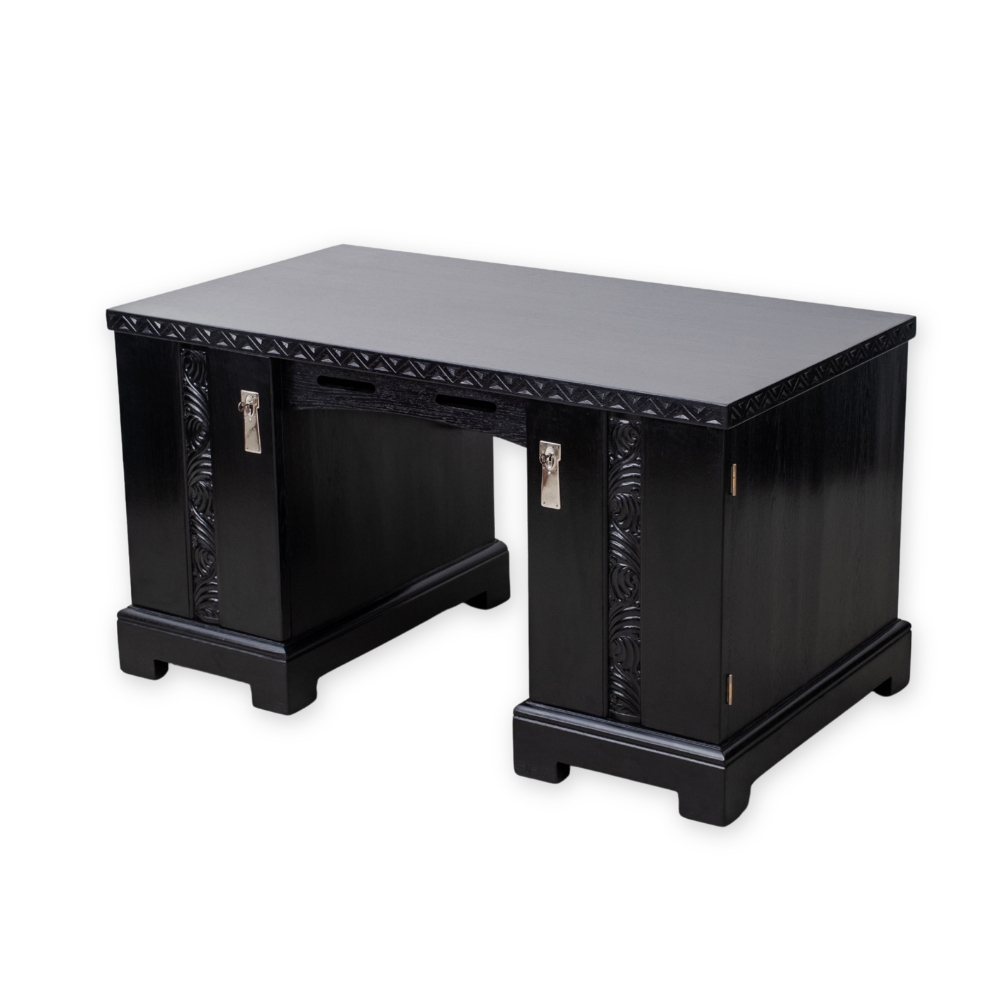
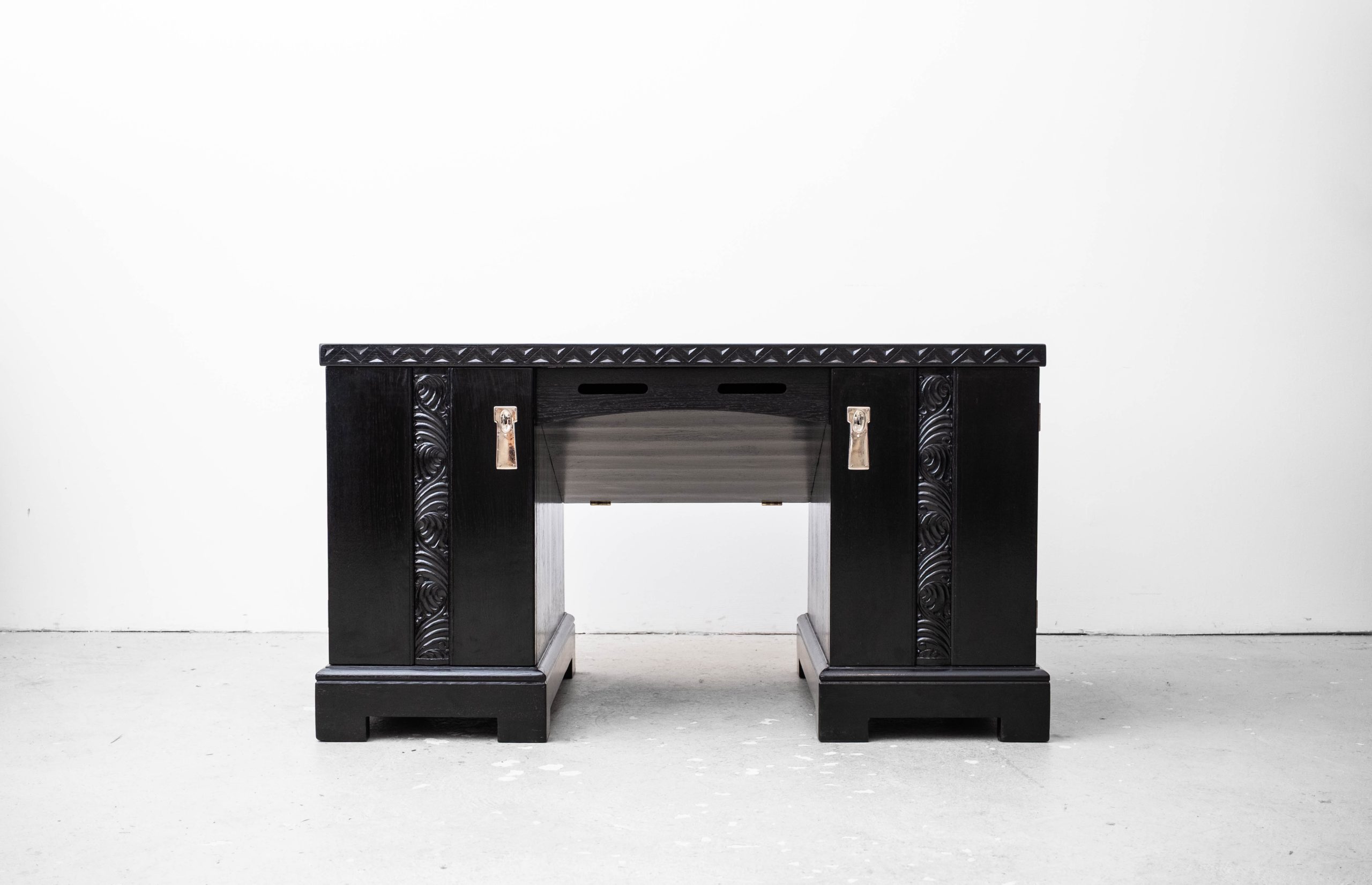
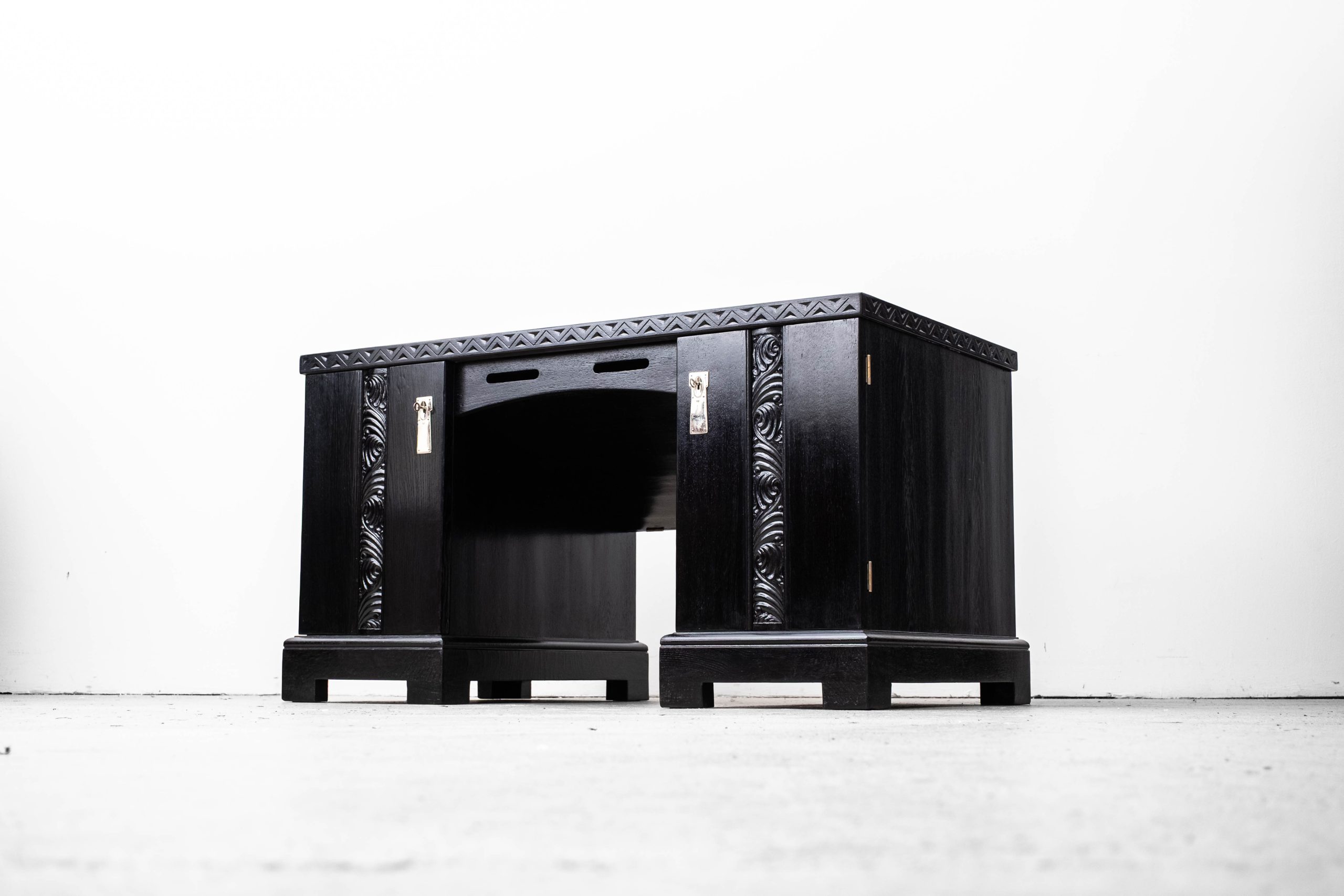
Jugendstil desk Karl Bräuer attr. school Josef Hoffmann Wiener Werkstätte attr. ca. 1910

SKU 1152 ,

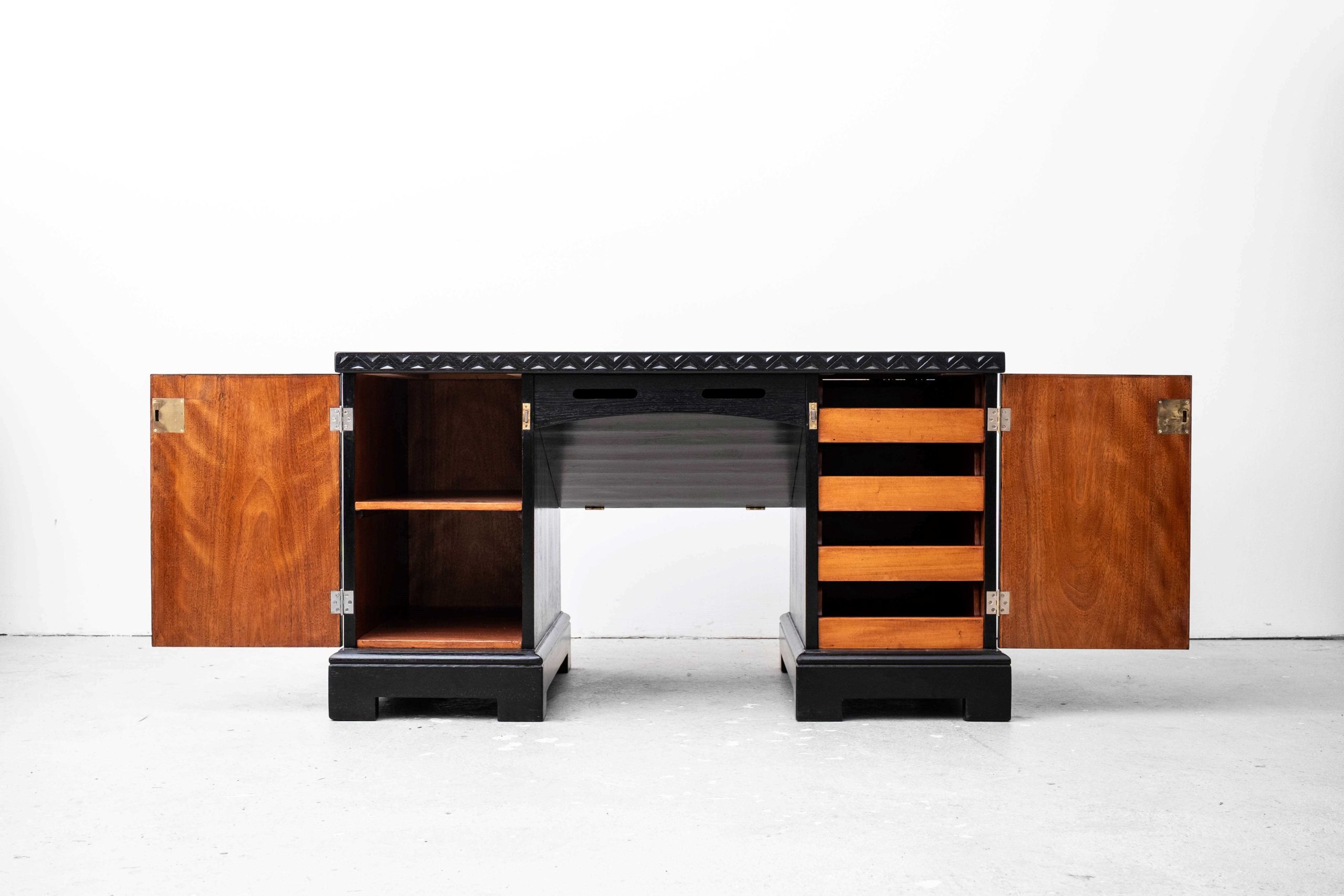
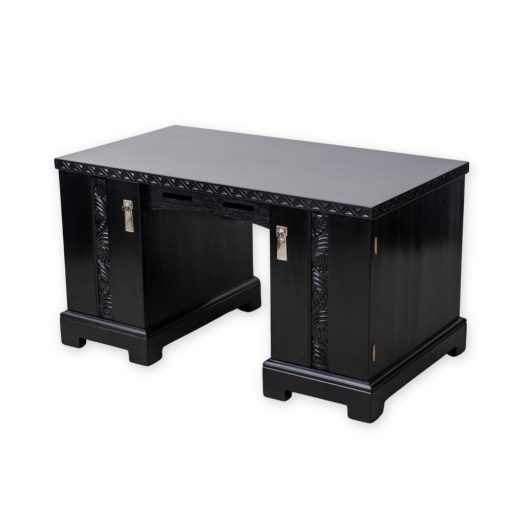
desk, Karl Bräuer attr., School Josef Hoffmann, execution Wiener Werkstätte attr., ca. 1910

  • Height: 80.5cm
  • Length: 80cm
  • Width: 145cm
  • Date: 1910 to 1915
    Epoch: Art Nouveau
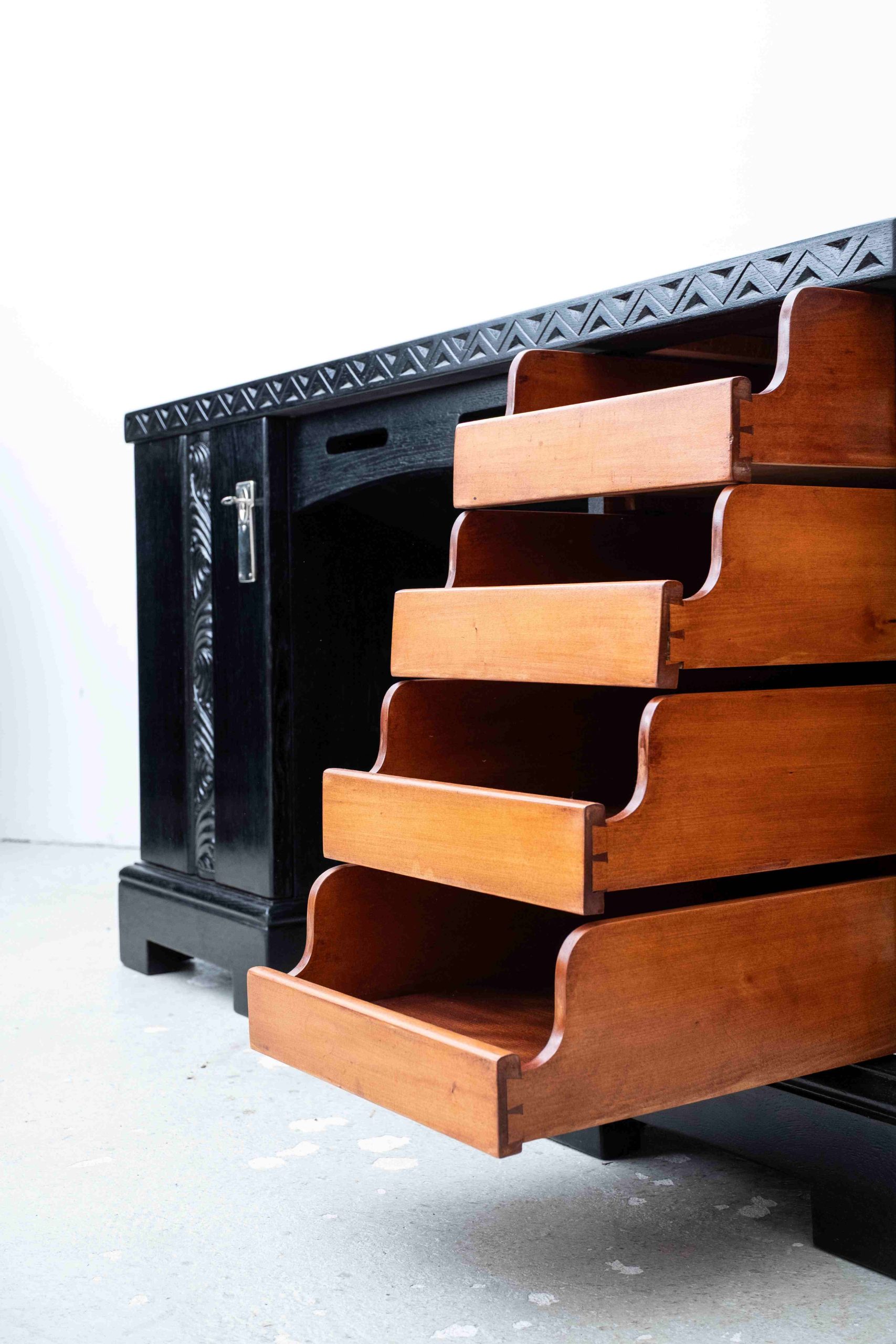
    Technique: softwood body, oak & mahogany veneer; Alpaka silver

    This object is the result of a collaboration between FLORIAN KOLHAMMER – art since the turn of the 20th century & GALERIE TRAUDES KINDER.

    Bib.: Das Interieur, Wiener Monatshefte für angewandte Kunst, year 12., Vienna 1911, table 9 / Deutsche Kunst und Dekoration, Vol. 25, 1909-1910, Alexander Koch, Darmstadt, p. 402 / Photograph, Speisezimmer, Villa, Prof. Pickler, Budapest II, Trombitas ut 19, Anonym, MAK Inv.nr. WWF 104-234-1 /Das Interieur, Wiener Monatshefte für angewandte Kunst, 12. Jahrgang, Wien 1911, table 25.

    27.000,00 incl. VAT
    SKU 1152 ,
    Description

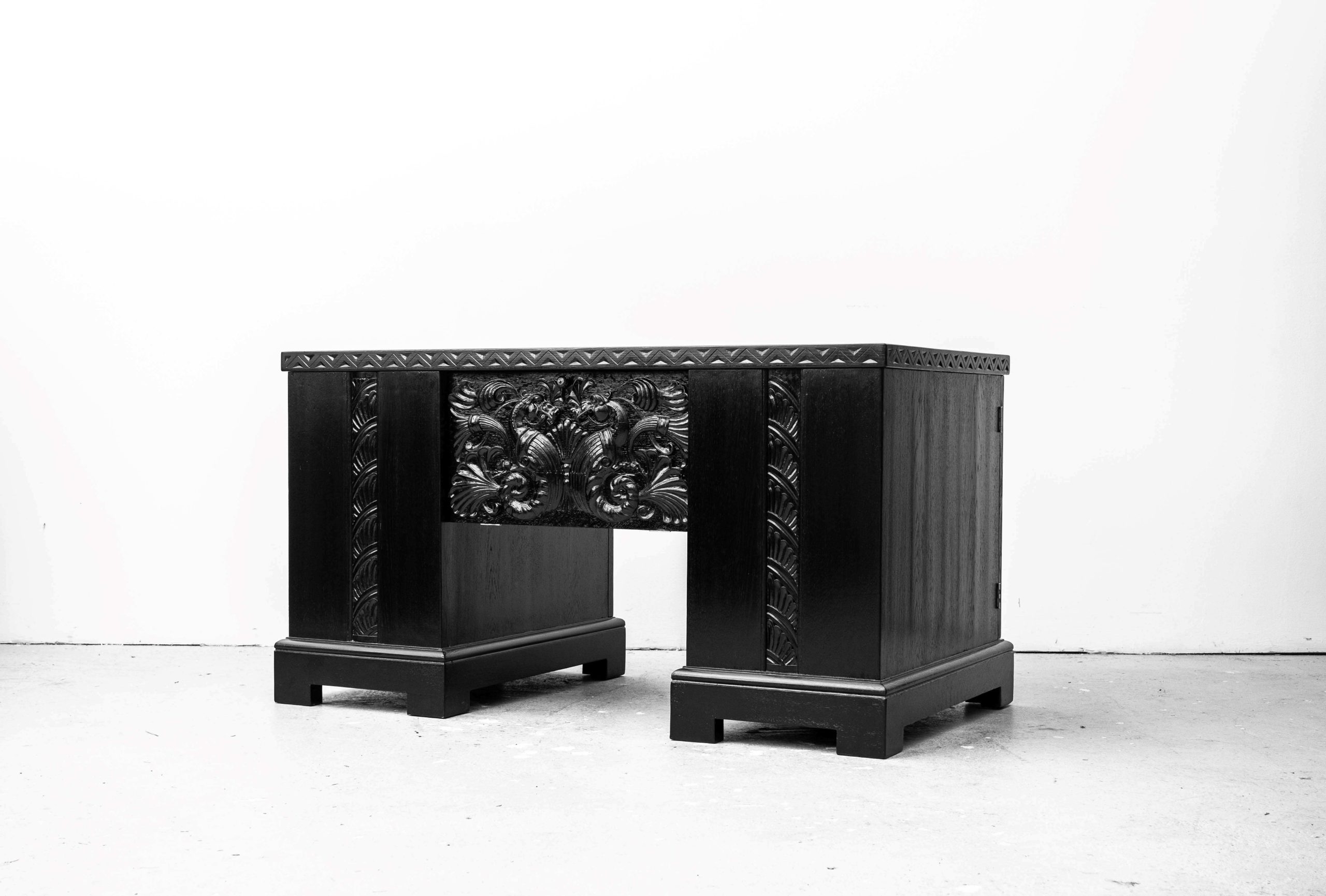
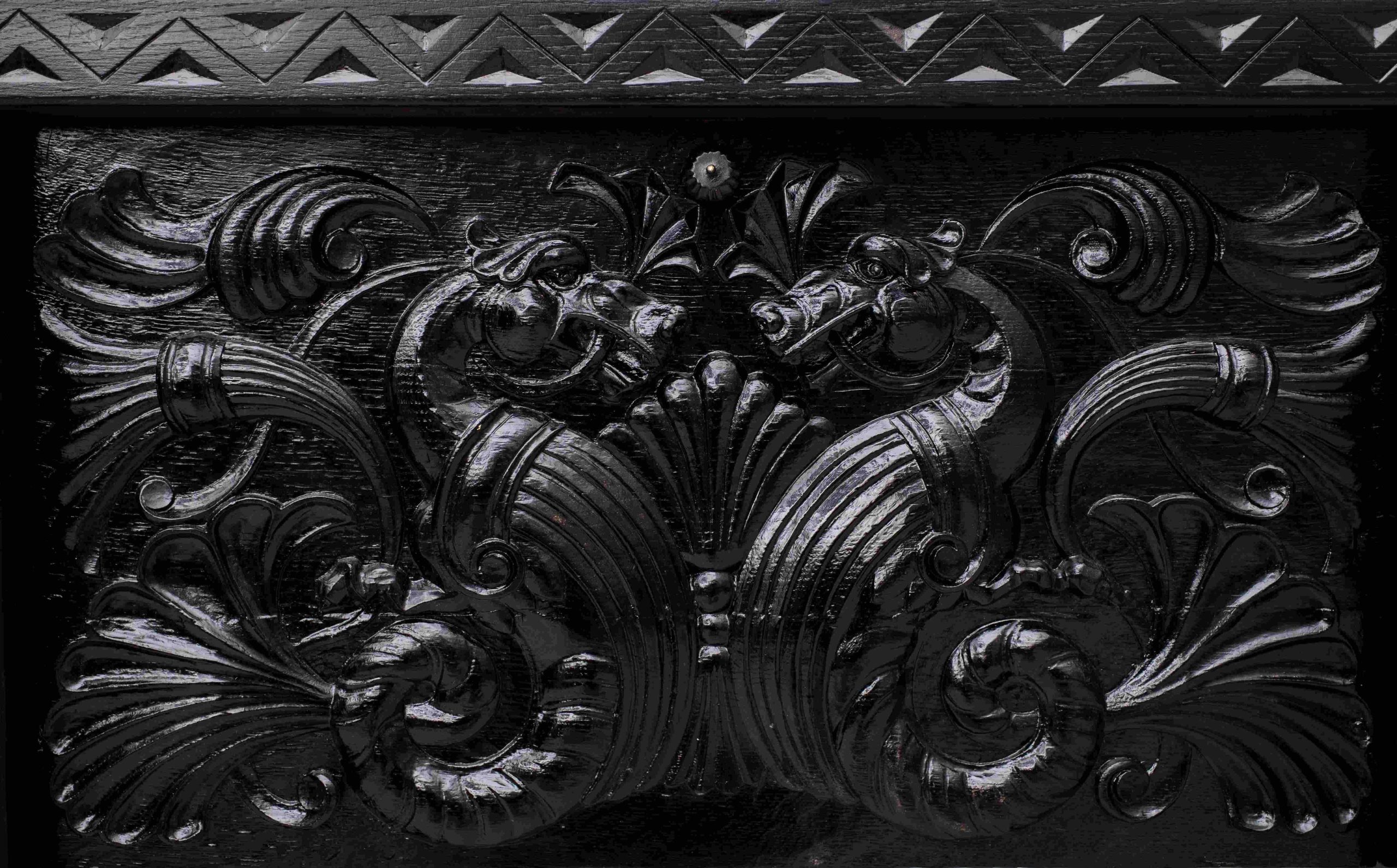
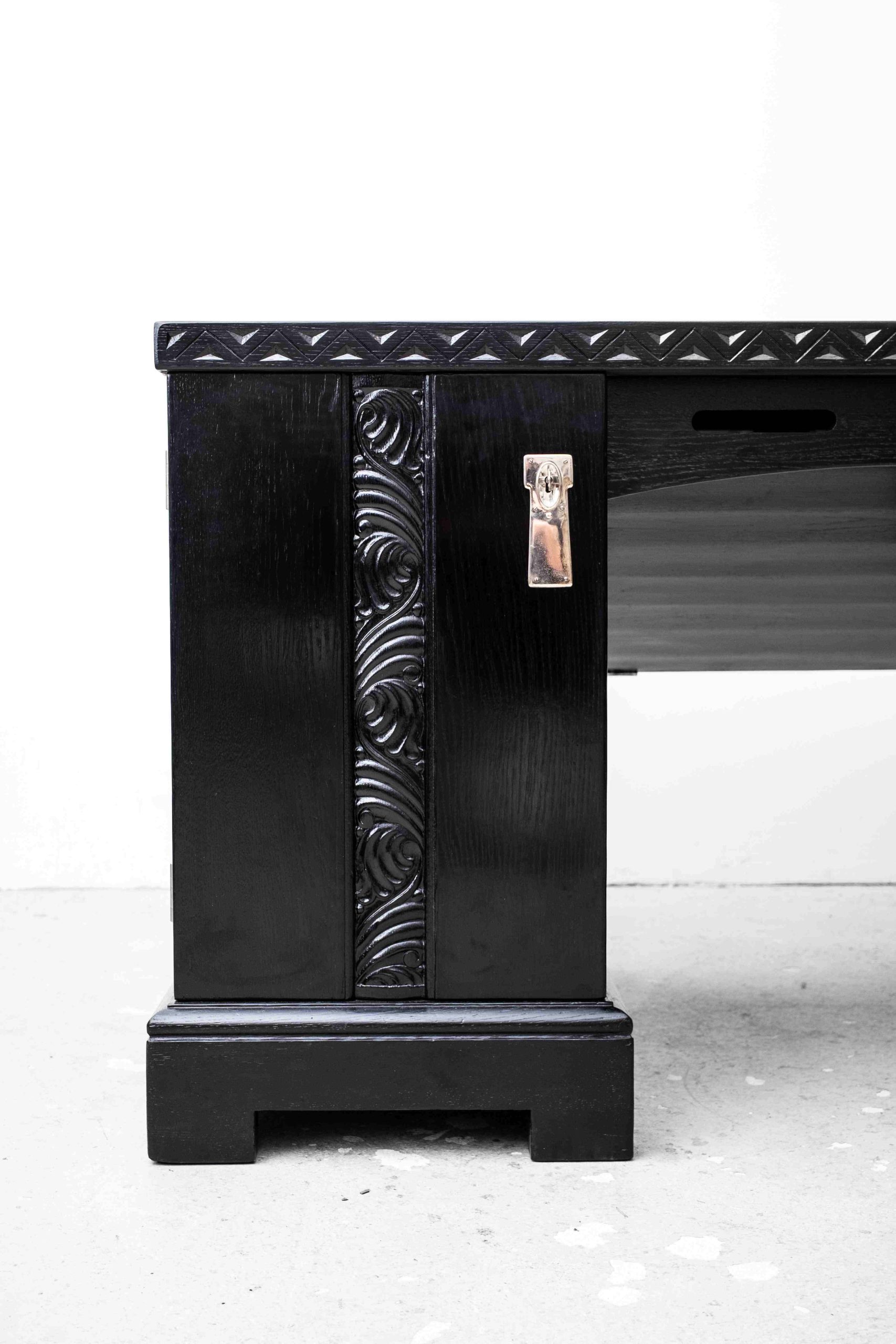
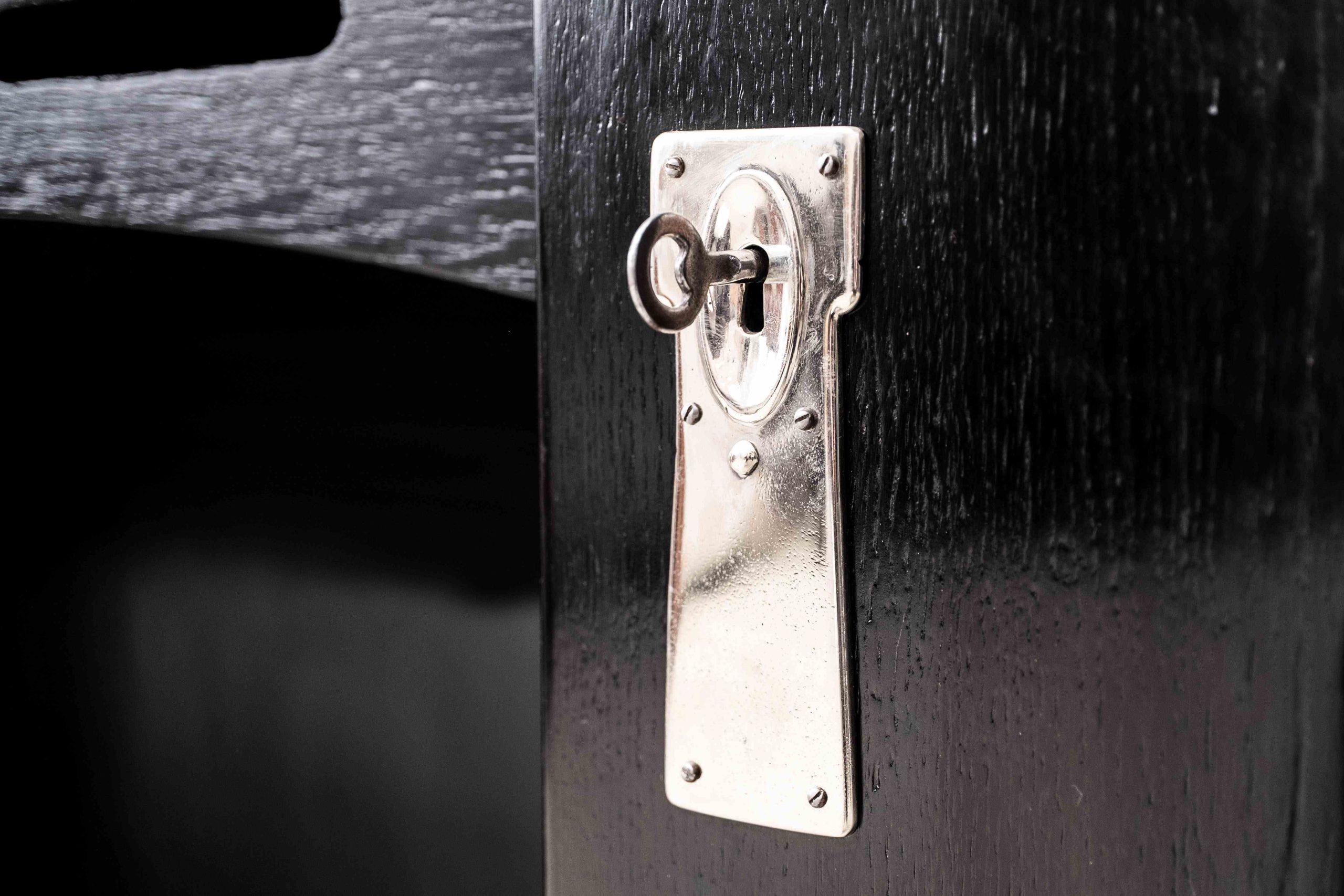
    This desk exemplifies the clean lines and decorative precision characteristic of the Hoffmann school around 1910. Its strictly geometric structure is complemented by finely executed, partly organic carvings and high-quality alpaca silver hardware.

    As a freestanding piece of furniture, it is designed to be impressive from every angle. The back features a fold-out letter tray, whose floral seahorse ornamentation underscores the quality of the detailing.

    The design can be attributed to Karl Bräuer, a student and close collaborator of Josef Hoffmann at the Wiener Werkstätte. Comparable motifs bearing the monogram “KB” were published in “Das Interieur” in 1911 and show clear parallels, particularly in the characteristic triangular ornamentation.

    EXECUTION

    Wiener Werkstatte 1903 - 1932 The Wiener Werkstatte was a production community founded on the model of the Arts and Crafts movement, which aimed to provide a platform for artistically designed and high quality crafts. Or, as G. Fahr-Becker puts it "...it was a workshop that gathered many, a work of art as the result of all the arts." Founded in 1903 by Josef Hoffmann, Koloman Moser and industrialist Fritz Waerndorfer, the Wiener Werkstatte (WW) initially produced and distributed only metal objects. The range was subsequently rapidly expanded to include furniture, furnishings, textiles, jewellery, accessories made of ceramics and glass, leather, etc. The wide range of products was sold in the company's own business premises in Vienna and, for a time, also in branches in Zurich and New York. The founding fathers and artistic directors J. Hoffmann and K. Moser originally pursued the ideal of artistic penetration of all areas of life in the sense of the Gesamtkunstwerk (total work of art). This radical aspiration could only be realized in a few projects, which were commissioned primarily by upper-class patrons. Impressive examples of this are the Palais Stoclet in Brussels or the Villa Skywa-Primavesi in Vienna. In its early years, the company was still committed to a strict geometric style, but this functionalism was soon expanded to include more pleasing forms. As a representative of a more decorative line, we should mention Dagobert Peche, who with his playful, imaginative ornamentation contributed designs for all divisions of WW. An important creative contribution, especially in the decorative sections of the WW, was made by the female artists from around 1915. The best known would probably be the ceramic artists Vally Wieselthier and Gudrun Baudisch. The significance of many of these female designers has only been duly appreciated in recent years*. The increasingly difficult economic environment after World War I led to the liquidation of the WW in 1932. Gabriele Fahr-Becker writes: "The financial difficulties which the Wiener Werkstatte had to face during its existence were not primarily the result of economic ignorance, but were based on the fact that the broad public could not be reached as buyers" (G. Fahr-Becker, Wiener Werkstätte, Taschen 1994, p. 12). Beyond the relatively short period of its existence, the Wiener Werkstatte exerted a lasting influence. Arts and crafts as well as applied arts were decisively revalued and a whole generation of architects, artists and designers were influenced by the artistic will of their founding fathers. This expression can later be found in the "Bauhaus" movement or in Nordic design. *Bib.: C. Thun-Hohenstein, A.-K. Rossberg, E. Schmuttermeier (ed.), Die Frauen der Wiener Werkstatte (The Women of the Wiener Werkstatte), exhibition catalog Museum of Applied Arts Vienna, Wien 2020

    Jugendstil desk Karl Bräuer attr. school Josef Hoffmann Wiener Werkstätte attr. ca. 1910
    27.000,00

    By sending the inquiry form, you accept the use of your data for this inquiry. Privacy Policy

    Plankengasse 5
    1010 Wien
    Opening hours

    Monday to Friday: 11:00 a.m. – 7:00 p.m.
    Saturday: 11:00 a.m. – 4:00 p.m.
    and by appointment

    Contact

    Thank you for your inquiry!

    We will process your request as quickly as possible.

    Current time in Vienna:
    Thursday, 06:45
    Office hours

    Monday to Friday: 11:00 a.m. – 7:00 p.m.
    Saturday: 11:00 a.m. – 4:00 p.m.

    Visit our exhibitions too

    Für den Versand unserer Newsletter nutzen wir rapidmail. Mit Ihrer Anmeldung stimmen Sie zu, dass die eingegebenen Daten an rapidmail übermittelt werden. Beachten Sie bitte deren AGB und Datenschutzbestimmungen .

    We have moved and look forward to your visit ​​​​at our new address:

    Plankengasse 5,
    1010 Vienna 

    Thank you for subscribing to our newsletter!

    We have now sent you an email with a link to confirm your email address.

    Social Media

    Always up to date with
    our newsletter

    Our next exhibitions

    Für den Versand unserer Newsletter nutzen wir rapidmail. Mit Ihrer Anmeldung stimmen Sie zu, dass die eingegebenen Daten an rapidmail übermittelt werden. Beachten Sie bitte deren AGB und Datenschutzbestimmungen .