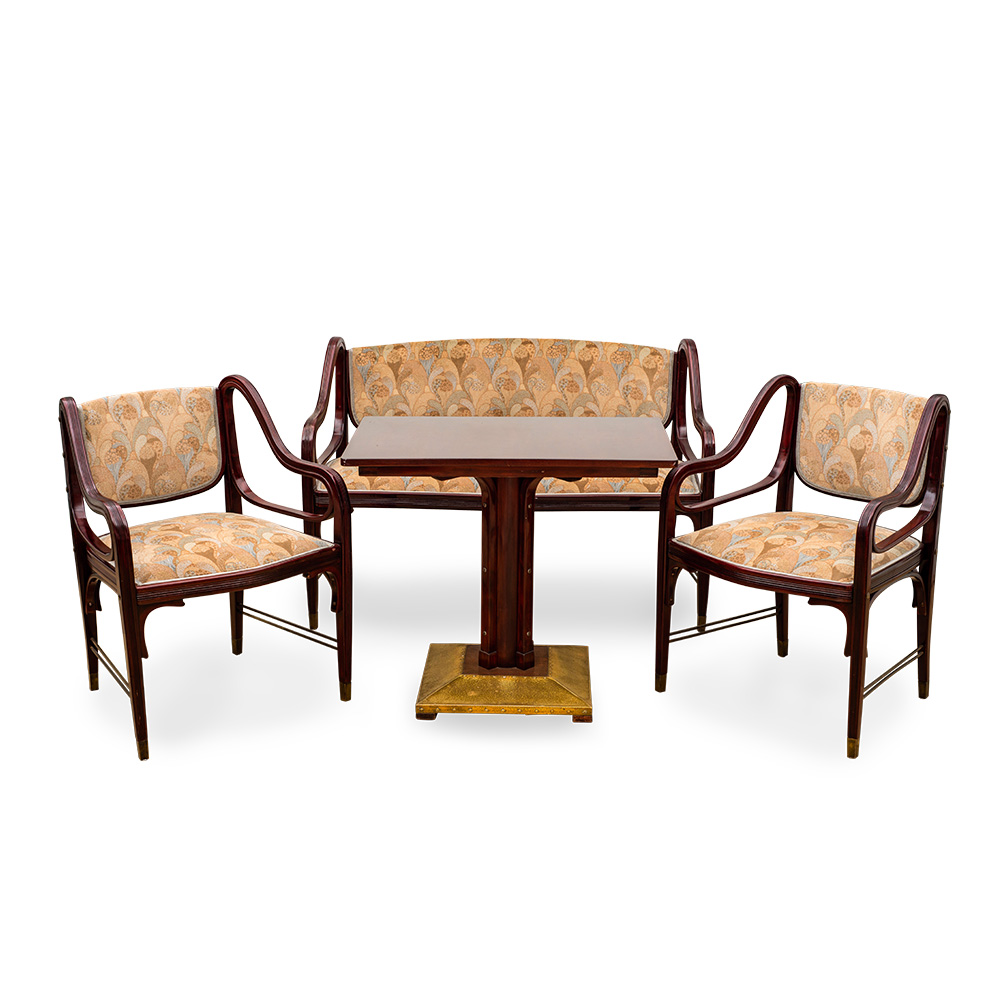
Seating ensemble Otto Wagner J. & J. Kohn ca. 1902

SKU 561

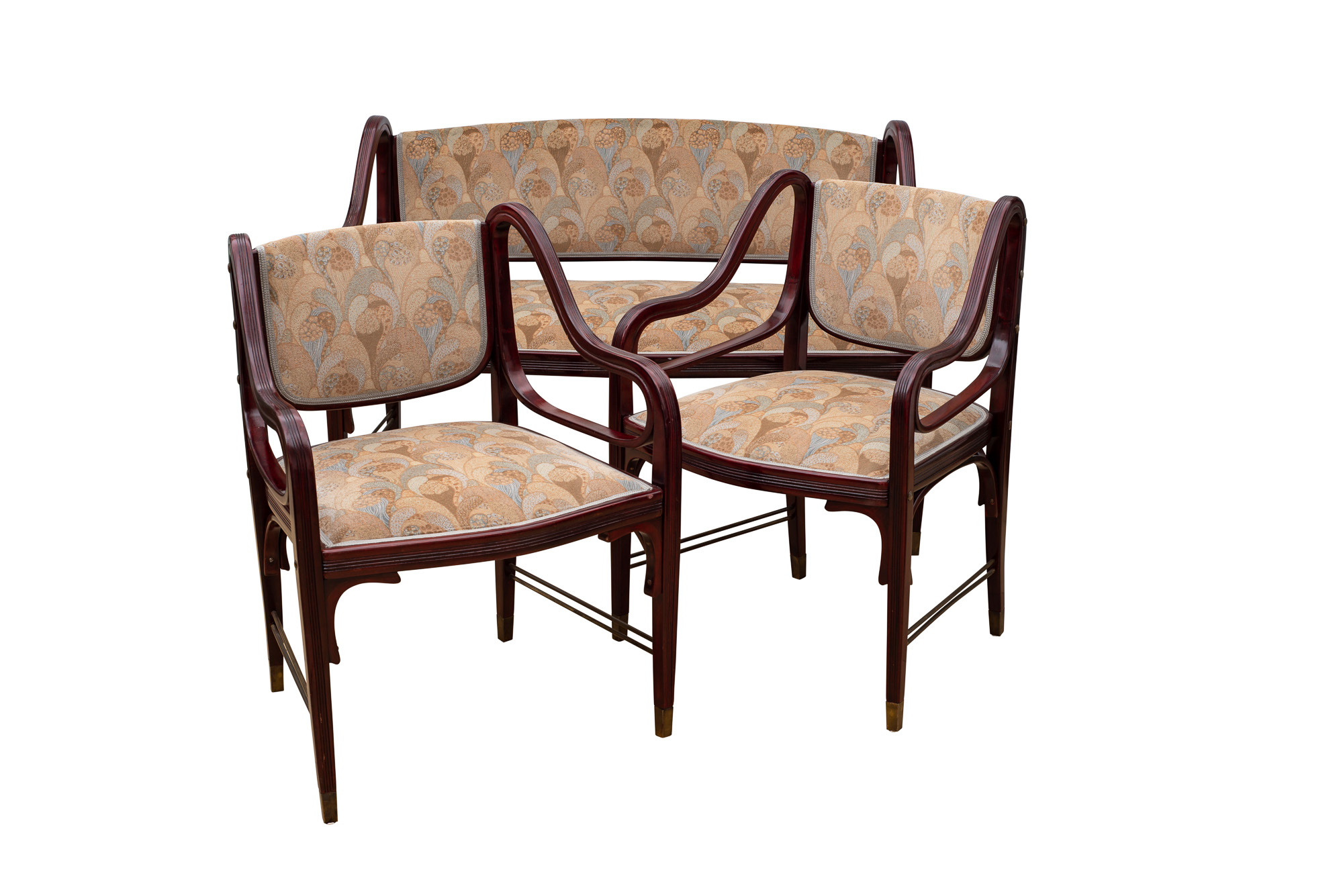
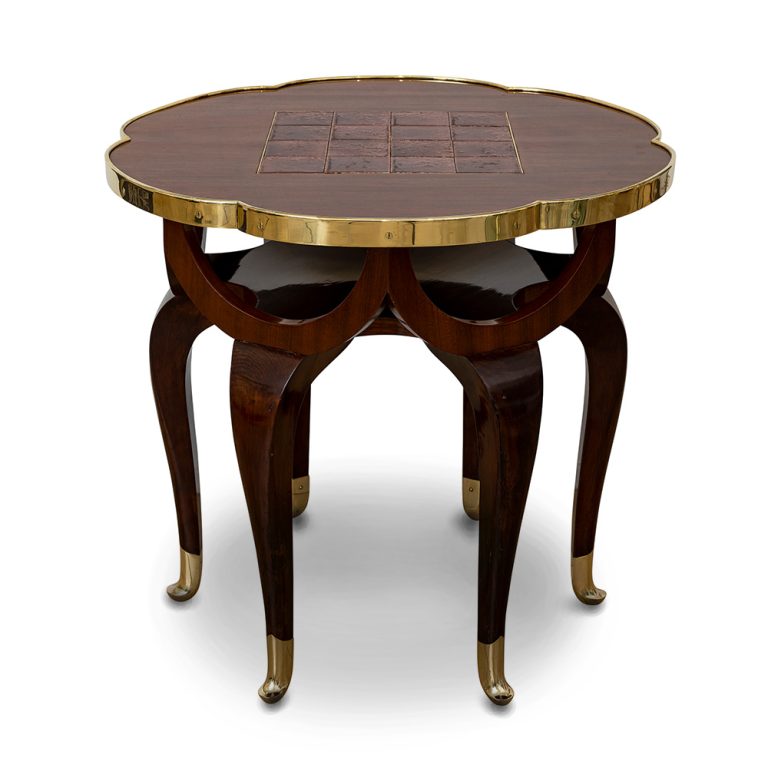
Seating set, design Otto Wagner, execution J. & J. Kohn, consisting of 2 Fauteils a bench and a table model 412, ca. 1902

  • Height: 80cm
  • Length: 57cm
  • Width: 118cm
  • Date: 1902 to 1905
    Epoch: Art Nouveau
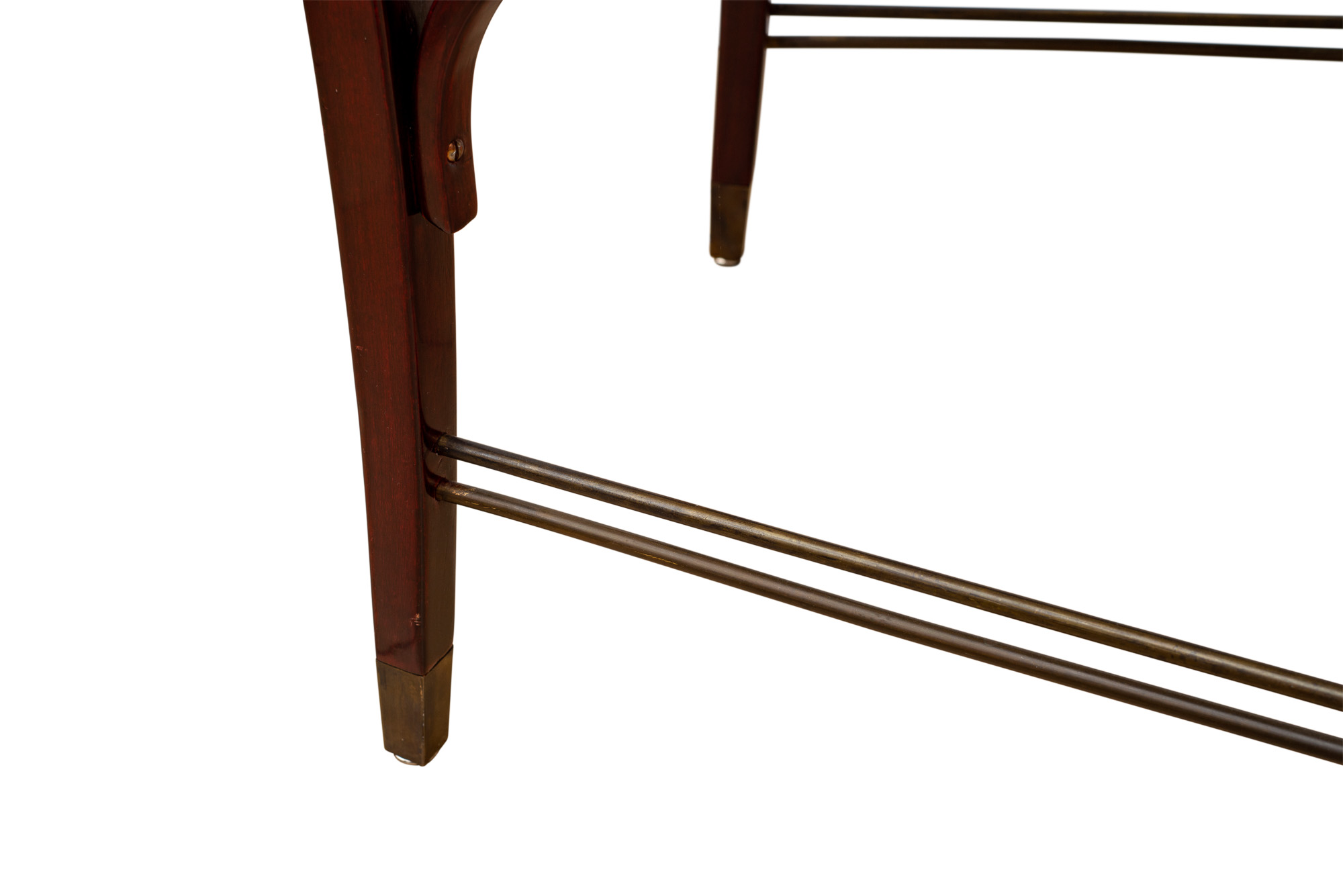
    Technique: Beech bent, stained, polished, brass, upholstery design Koloman Moser "Ver Sacrum"

    Bib.: Giovanni Renzi, „Il mobile moderno“, Silvana Editoriale Spa, Milano, 2008. P. 48-49 Eva B. Ottilinger (ed.), „Wagner, Hoffmann, Loos und das Möbeldesign der Wiener Moderne“, catalogue Hofmobiliendepot Wien, Böhlau Verlag, Vienna, 2018, p.34 and following

    12.500,00 incl. VAT
    SKU 561
    Description

    Otto Wagner was one of the ground-breaking architects of Vienna’s modernism or, to quote a statement by the influential Viennese Salonière Berta Zuckerkandl: “Otto Wagner proclaims the architectural style of the 20th century(transl.)”. Among his main projects in Vienna are the Postsparkassengebäude, the church at Steinhof and the three so called “Wienzeilenhäuser”.

    As a pioneer, he made use of the new technique of bentwood for his furniture designs. Wagner designed this sitting room suite in 1901 and it was manufactured from 1902 on by the company J. & J. Kohn, which together with Thonet, was the leading producer of bentwood furniture at that time. The curved armrests emphasize the advantage of this new technique. Visible brass studs help to stabilize the furniture and at the same time form an adorning element. This sitting room suite has been upholstered with fabric by Backhausen, designed by Koloman Moser.

    ARTIST

    Otto Wagner (Vienna 1841 – 1918 Vienna) was one of the pioneering architects of Viennese Modernism, who led Austria to abandon the overloaded historicist style. Both in architecture and design, he implemented his postulate that form must follow function and systematically used new materials in his projects, such as aluminium or bentwood.

    His main works include the Postsparkassengebäude (postal savings bank building) and the Steinhof church in Vienna, as well as the three Wienzeilenhäuser (residential houses). He also set urban development standards with his project for the Vienna tramway network.
    As an already established architect, he taught at the Academy of Fine Arts in Vienna from 1894 to 1915 and thus exerted great influence on the next generation of Viennese architects.

    In the years 1899 to 1905, he was a member of the Viennese Secession and became an important mentor of renowned students and co-workers, including Joseph Maria Olbrich, Josef Hoffmann and Gustav Siegel.

    With his buildings, he proclaimed the architectural style of the 20th century, as Berta Zuckerkandl put it, and he created iconic classics in his furniture design, with a sense of aesthetics far ahead of their time.

    EXECUTION

    The Moravian company Jacob & Josef Kohn, originally specialized in the wood trade, expanded its business activities from 1867 to include the production of bentwood furniture. Until that time, the company “Gebrüder Thonet” had a monopoly on the production of bentwood furniture. With this new technique, beech wood was bent into the desired shape under the effect of steam and thus enabled the serial production of modern utility furniture. With the innovative idea of having their furniture designed by important designers of Viennese Modernism, J. & J. Kohn became one of Thonet's strongest competitors. The company commissioned some of the most sought-after architects of the time, such as Otto Wagner, Adolf Loos, Josef Hoffmann, Koloman Moser and Gustav Siegel, to design furniture. With their high-quality furnishings, the company was successful at many world exhibitions (World Exhibition in Vienna 1873, World Exhibition in Paris 1900, International Exhibition in Turin 1902, to name but a few). Aesthetically in tune with the times, the modern furniture from J. & J. Kohn became popular with the wealthy middle classes throughout Europe and overseas. The great international success was also due to the dense distribution network of the company, with branches in all major European cities. With the company motto "semper sursum" (always upwards) Jacob & Josef Kohn advanced to become one of the most successful furniture manufacturers in the Austro-Hungarian Monarchy. Seating sets, display cabinets and typical Jugendstil living accessories (tiered tables, flower columns, shelves, etc.) from the period up to around 1914 with the original label or brand stamp "Jacob & Josef Kohn, Wien" are today sought-after collector's items worldwide.

    Seating ensemble Otto Wagner J. & J. Kohn ca. 1902
    12.500,00

    By sending the inquiry form, you accept the use of your data for this inquiry. Privacy Policy

    Plankengasse 5
    1010 Wien
    Opening hours

    Monday to Friday: 11:00 a.m. – 7:00 p.m.
    Saturday: 11:00 a.m. – 4:00 p.m.
    and by appointment

    Contact

    Thank you for your inquiry!

    We will process your request as quickly as possible.

    Current time in Vienna:
    Wednesday, 21:26
    Office hours

    Monday to Friday: 11:00 a.m. – 7:00 p.m.
    Saturday: 11:00 a.m. – 4:00 p.m.

    Visit our exhibitions too

    Für den Versand unserer Newsletter nutzen wir rapidmail. Mit Ihrer Anmeldung stimmen Sie zu, dass die eingegebenen Daten an rapidmail übermittelt werden. Beachten Sie bitte deren AGB und Datenschutzbestimmungen .

    We have moved and look forward to your visit ​​​​at our new address:

    Plankengasse 5,
    1010 Vienna 

    Thank you for subscribing to our newsletter!

    We have now sent you an email with a link to confirm your email address.

    Social Media

    Always up to date with
    our newsletter

    Our next exhibitions

    Für den Versand unserer Newsletter nutzen wir rapidmail. Mit Ihrer Anmeldung stimmen Sie zu, dass die eingegebenen Daten an rapidmail übermittelt werden. Beachten Sie bitte deren AGB und Datenschutzbestimmungen .